 Print
Print Word
Word PDF
PDF|
This section contains 9,627 words (approx. 33 pages at 300 words per page) |

|
Introduction
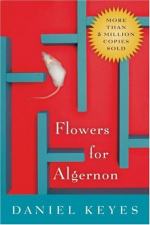
Flowers for Algernon, Daniel Keyes's best-known novel, has remained in print continuously since it was first published in the 1960s. Constructed from first-person "progress reports," the novel chronicles the transformation of protagonist Charlie Gordon from a mentally retarded adult into an intellectual genius. Charlie is the first person to undergo an experimental surgery that produces such a change. However, his increased intellectual capacity is only temporary, as the scientists first learn from Algernon, a lab mouse who has also had the surgery.
During the months of Charlie's transformation, he remembers much about his past, in which he was often used and abused because of his disability. Yet the intelligent Charlie suffers from loneliness and an inability to relate to much of the world. He also feels that the scientists who help him look at him...
|
This section contains 9,627 words (approx. 33 pages at 300 words per page) |
|