Forgot your password?  

Not What You Meant?  There are 102 definitions for Flapper.  Also try: Flap.

Flappers | Research & Encyclopedia Articles

Print-Friendly   Order the PDF version   Order the RTF version
About 3 pages (785 words)
Flapper Summary


Flappers

In the 1920s a new and popular model of modern womanhood dominated the American cultural scene. Although not all American women of the early twentieth century would emulate the flapper model, that model quickly came to represent the youthful exuberance of the post-World War I period. According to F. Scott Fitzgerald, the author whose novels set a tone for the 1920s, the ideal flapper, representing the ideal modern woman, was "lovely, expensive, and about nineteen." Originally merely a symbol of young and daring female chic, the flapper came to embody the radically modern spirit of the 1920s. Not merely a fashion trend, "flapperhood" came to represent an entire new set of American values.

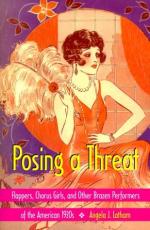
The term "flapper" originated in England, where it was used simply to describe girls of an awkward age. American authors like Fitzgerald transformed the term into an iconic phrase that glorified the fun-loving youthful spirit of the post-war decade. The flapper ideal,along with the look, became popular, first with chic young moderns, then with a larger body of American women. The flapper was remarkably identifiable. With her bobbed hair, short skirts, and penchant for lipstick, the starlet who had "it," Clara Bow, embodied the look. Other celebrity women, from the film star Louise Brook to the author Dorothy Parker, cultivated and popularized the devil-may-care attitude and fashion of the flapper. America's young women rushed to emulate the flapper aesthetic. They flattened their chests with tight bands of cloth in order to look as young and boyish as possible. They shortened the skirts on their increasingly plain frocks, and they bought more cosmetics than American women ever had before.

A flapper girl, c. 1922.A flapper girl, c. 1922.

But flapperhood was more than mere fashion. To an older generation of Americans the flapper symbolized a "revolution in manners and morals." Flappers did not just look daring, they were daring. In the 1920s growing numbers of young American women began to smoke, drink, and talk slang. And they danced. Not in the old style, but in the new mode inspired by jazz music. The popularity of jazz and dancing hinted at new attitudes toward sexuality. The image of the "giddy flapper, rouged and clipped, careening in a drunken stupor to the lewd strains of a jazz quartet," gave license to new ideas about female sexuality. As F. Scott Fitzgerald claimed, "none of the Victorian mothers … had any idea how casually their daughters were accustomed to being kissed." Flappers presented themselves as sexual creatures, radically different to the stable maternal women who epitomized the ideal of the previous generation.

And yet the popularity of the flapper did not, as one might suppose, signal the triumph of feminism in the early twentieth century. For the flapper, for all her sexual sophistication and her rejection of her mother's Victorian values, did not pose any real threat to the gender status quo. Although the flapper presented a positive image for modern women, with her athleticism and her adventurous spirit, the flapper remained a soft creature who demurred to men. Indeed, it was precisely the flapper's "combination of daring spirit and youthful innocence that made her attractive to men." The flapper was a highly sexualized creature, but that sexuality retained an innocent, youthful, romantic quality. Ultimately, flappers married and became the mothers of the 1930s.

Although flappers presented a new model of single womanhood that would have positive ramifications because it gave license to women to work and play alongside men, that model had its limits. The transformative cultural promise of the flapper moment would recede just like the fashion for short skirts and short hair. In the long years of the Depression the desire to emulate reckless rich girls faded along with the working girl's ability to afford even the cheapest imitation of flapper chic. Remnants of the flapper lifestyle, however, remained popular—a youthful taste for music and dancing, smoking and swearing, sex and sexiness. And the market for goods that had emerged to meet the consuming passions of flapper women gained in strength and power. Even after the flapper disappeared from the American scene the feminine ideal that she had popularized lingered—along with a culture of consumption designed to help women pursue that impossibly impermanent idea. For the ideal modern woman of America's imagination, although no longer officially a "flapper," was to remain infuriatingly "lovely … and about nineteen."

Further Reading:

Allen, Frederick Lewis. Only Yesterday: An Informal History of the 1920s. New York and London, Harper Brothers, 1931.

Coben, Stanley. Revolt Against Victorianism: The Impetus for Cultural Change in 1920s America. New York, Oxford University Press, 1991.

Fass, Paula. The Damned and the Beautiful: American Youth in the 1920s. New York, 1977.

Marchand, Roland. Advertising the American Dream: Making Way for Modernity 1920-1940. Berkeley, University of California Press, 1985.

This is the complete article, containing 785 words (approx. 3 pages at 300 words per page).

More Information
  • View Flappers Study Pack
  • 102 Alternative Definitions
  • Search Results for "Flappers"
  • More Products on This Subject
    Flapper Girls
    The flapper era was a time to worship the youth. The word "flapper" was used to describe immoral you... more


    Ask any question on Flapper and get it answered FAST!
    Answer questions in BookRags Q&A and earn points toward
    discounted or even FREE Study Guides and other BookRags products!
    Learn more about BookRags Q&A
    Copyrights
    Flappers from St. James Encyclopedia of Popular Culture. ©2005-2006 Thomson Gale, a part of the Thomson Corporation. All rights reserved.

    Join BookRagslearn moreJoin BookRags

    Join BookRagslearn moreJoin BookRags