
 Print
Print Word
Word PDF
PDF|
This section contains 2,232 words (approx. 8 pages at 300 words per page) |

|
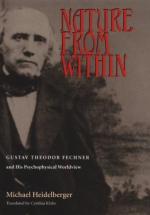
Gustav Theodor Fechner, the German philosopher, was the founder of psychophysics, and a pioneer in experimental psychology. He was born in Gross-Saerchen, Prussia, and studied medicine at the University of Leipzig, where he passed his examinations at the age of twenty-one. His interests, however, led him into physics, and by 1830 he had published more than forty papers in this field. He also wrote a number of poems and satirical works under the pseudonym of "Dr. Mises," which he also used for some of his later metaphysical speculations. A paper on the quantitative measurement of electrical currents (1831) led to his appointment as professor of physics at Leipzig. Fechner's incipient interest in psychology is shown in papers of 1838 and 1840 on the perception of complementary colors and on subjective afterimages. His experiments on afterimages, however, had tragic consequences. As a result of gazing at the...
|
This section contains 2,232 words (approx. 8 pages at 300 words per page) |
|



