Forgot your password?  

Not What You Meant?  There are 13 definitions for Faraday.

Faraday, Michael (1791–1867) | Research & Encyclopedia Articles

Print-Friendly   Order the PDF version   Order the RTF version
About 4 pages (1,071 words)
Michael Faraday Summary


Table 1. Explosive substances. Table 1. Explosive substances.

Faraday, Michael (1791–1867)

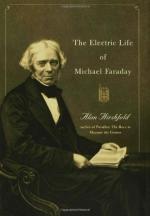
Michael Faraday has been called the "patron saint of electrical engineering." He produced the first electric motor and the first electric generator and is considered the greatest experimental scientist of the nineteenth century. Faraday came from humble beginnings. He was born in a village that is now part of London, and his father was a migrant blacksmith who was often ill and unable to support his family. Faraday often went hungry as a child and his only formal education was at a Sandemanian Church Sunday school. (The Sandemanians were a small fundamentalist Christian sect, and Faraday later became an elder of the church.) At age thirteen, he was apprenticed to a bookbinder for seven years. In addition to binding the books, he read them voraciously. Although he completed the apprenticeship, he subsequently sought a way out of a trade that he considered selfish and vicious.

Faraday's great opportunity came when a friend offered him a ticket to attend the lectures on chemistry given by Sir Humphrey Day, the director of the Royal Institution in London. After attending the lectures, Faraday sent Davy a neatly bound copy of his notes and asked for employment. In 1812 Davy did require a new assistant and, remembering the notes, hired Faraday. Davy was a leading scientist of his time and discovered several chemical elements, but it has been said that Faraday was his greatest discovery. Faraday was given quarters at the Royal Institution where he was to remain for forty-five years (staying on even after his marriage). Davy and his wife took Faraday with them as secretary to Europe on a grand tour in 1813. Despite the hostilities between France and England, they received Napoleon's permission to meet with French scientists in Paris. During this time Faraday's talent began to be recognized internationally.

In 1820 Faraday finished his apprenticeship under Davy and in the following year married and settled into the Royal Institution. Faraday's early reputation as a chemist was so great that in 1824 he was elected to the Royal Society. In 1825 Davy recommended that Faraday succeed him as director of the Royal Institution. The appointment paid only a hundred pounds a year, but Faraday soon received some adjunct academic appointments that enabled him to give up all other professional work and devote himself full-time to research. Faraday's scientific output was enormous, and at the end of his career, his laboratory notebooks, which covered most of his years at the Royal Institution, contained more than sixteen thousand neatly inscribed entries, bound in volumes by Faraday himself.

In his early work, Faraday was primarily a chemist. He liquefied several gases previously considered incapable of liquefaction, discovered benzene, prepared new compounds of carbon and chlorine, worked on new alloys of steel, and discovered the laws of electrolysis that bear his name. The latter discovery became the basis for the electroplating industry that developed in England during the early nineteenth century. In 1821, however, Hans Christian Oersted's discovery that an electric current could produce a magnetic field led Faraday away from chemistry for a while. With a better understanding of electric and magnetic fields, Faraday succeeded in building the first elementary electric motor.

Faraday returned to chemistry, but after 1830, his investigations again concentrated on electric and magnetic phenomena. He had become convinced that the reverse action to the phenomenon discovered by Oersted was also possible, that a magneticfield could produce an electric current. He also believed that he could induce a current in a circuit using an electromagnet like the one invented by Sturgeon in 1824. Wrapping two wires many times around opposite sides of an iron ring, Faraday discovered that when an electric current in one wire was turned on or off a current appeared in the other wire. Thus Faraday discovered the law of electromagnetic induction that bears his name: The electromotive force (voltage) induced in a circuit is equal to the (negative) time rate-of-change of the magnetic flux through the circuit. This law was not only the basis for the first elementary electric generator that Faraday produced, but also for all subsequent electric power dynamos that employ coils rotating in a magnetic field to produce electric power. Although Faraday is credited with the discovery because he was the first to publish his work, it was later learned that induction had been discovered shortly before by Joseph Henry, then an instructor in an obscure school in Albany, New York.

Michael Faraday. (Corbis Corporation)Michael Faraday. (Corbis Corporation)

In the decade that followed this discovery, Faraday continued to make fundamental discoveries about electricity and magnetism. He showed that the electricity obtained from various sources was the same, analyzed the effects of dielectrics on electrostatics, and studied electric discharges in gases. At the end of 1839, however, his health broke down. There is reason to believe that Faraday may have suffered from mercury poisoning, a common affliction in that period. He did not return to work completely until 1845, when he discovered the phenomena of magnetically induced birefringence in glass and of diamagnetism. In 1846 he published a paper in which he suggested that space was a medium that bore electric and magnetic strains and that these strains were associated with the propagation of light. Later scientists recognized that these ideas were the forerunners of the modern theory of electromagnetic propagation and optical fields.

Faraday worked alone; he had no students, just ordinary assistants. Although devoted to laboratory work, he was also a brilliant public lecturer. Personally, he was invariably described as a gentle and modest person. He never forgot his humble beginnings, and he had a clear view of his own worth and a disdain of the class system. In 1858, when Queen Victoria, in view of his lifetime of great achievement, offered him a knighthood and the use of a house, Faraday accepted the cottage but refused the knighthood, stating that he preferred to remain "plain Mr. Faraday."

Faraday's activity slowed after 1850, and, in 1865, a progressive loss of memory forced his complete retirement. He died in 1867 and he was buried, not in Westminster Abbey, but perhaps more befitting his egalitarian ideals, in Highgate Cemetery, London.

Electric Motor Systems; Electric Power, Generation Of; Magnetism and Magnets; Oersted, Hans Christian.

Bibliography

Atherton, W. A. (1984). From Compass to Computer. San Francisco: San Francisco Press.

Segrè, E. (1984). From Falling Bodies to Radio Waves. New York: W. H. Freeman.

Meyer, H. W. (1971). A History of Electricity and Magnetism. Cambridge, MA: MIT Press.

This is the complete article, containing 1,071 words (approx. 4 pages at 300 words per page).

More Information
  • View Faraday, Michael (1791–1867) Study Pack
  • 13 Alternative Definitions
  • Search Results for "Faraday, Michael (1791–1867)"
  • More Products on This Subject
    Michael Faraday
    The English physicist and chemist Michael Faraday (1791-1867) discovered benzene and the principles... more

    Michael Faraday
    Michael Faraday 's early life had a remarkable resemblance to that of Benjamin Franklin. Faraday wa... more


    Ask any question on Michael Faraday and get it answered FAST!
    Answer questions in BookRags Q&A and earn points toward
    discounted or even FREE Study Guides and other BookRags products!
    Learn more about BookRags Q&A
    Copyrights
    Faraday, Michael (1791–1867) from Macmillan Encyclopedia of Energy. Copyright © 2001-2006 by Macmillan Reference USA, an imprint of the Gale Group. All rights reserved.

    Join BookRagslearn moreJoin BookRags

    Join BookRagslearn moreJoin BookRags