BookRags.com Literature Guides Literature
Guides
Criticism & Essays Criticism &
Essays
Questions & Answers Questions &
Answers
Lesson Plans Lesson
Plans
My Bibliography Periodic Table U.S. Presidents Shakespeare Sonnet Shake-Up
Research Anything:        
History | Encyclopedias | Films | News | Create a Bibliography | More... Login | Register | Help

Search "Eubacteria"

Contents Navigation
 
Not What You Meant?  There are 4 definitions for Fog eater.

Eubacteria

Print-Friendly  Order the PDF version  Order the RTF version
About 6 pages (1,840 words)
Bacteria Summary

Bookmark and Share Questions on this topic? Just ask!
Penicillin-resistant bacteria contain an enzyme that chemically modifies penicillin, making it ineffective.

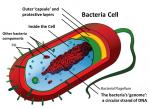
Some types of bacteria have an additional layer outside the cell wall. This layer is made from lipopolysaccharide (LPS), a combination of lipids and sugars. There are several consequences to possessing this outer layer. Of least import to the bacteria but significant for researchers, this layer preventsthem from retaining a particular dye (called Gram stain) that is used to classify bacteria. Bacteria that have this LPS layer are called Gram-negative, in contrast to Gram-positive bacteria, which do not have an outer LPS layer and which do retain the stain. Of more importance to both the bacteria and the organisms they infect is that one portion of the LPS layer, called endotoxin, is particularly toxic to humans and other mammals. Endotoxin is partly to blame for the damage done by infection from Salmonella and other Gram-negative species.

Within the cell wall is the plasma membrane, which, like the eukaryotic plasma membrane, is a phospholipid bilayer studded with proteins. Embedded in the membrane and extending to the outside may be flagella, which are whiplike protein filaments. Powered by molecular motors at their base, these spin rapidly, propelling the bacterium through its environment.

This is a free page. This page contains 194 words. This article contains 1,840 words (approx. 6 pages at 300 words per page).

Read the rest of this Article with our Eubacteria Access Pass.

Ask any question on Bacteria and get it answered FAST!
Answer questions in BookRags Q&A and earn points toward
discounted or even FREE Study Guides and other BookRags products!
Learn more about BookRags Q&A
Copyrights
Eubacteria from Macmillan Science Library: Genetics. Copyright © 2001-2006 by Macmillan Reference USA, an imprint of the Gale Group. All rights reserved.

Join BookRagslearn moreJoin BookRags


About BookRags | Customer Service | Report an Error | Terms of Use | Privacy Policy