BookRags.com Literature Guides Literature
Guides
Criticism & Essays Criticism &
Essays
Questions & Answers Questions &
Answers
Lesson Plans Lesson
Plans
My Bibliography Periodic Table U.S. Presidents Shakespeare Sonnet Shake-Up
Research Anything:        
History | Encyclopedias | Films | News | Create a Bibliography | More... Login | Register | Help

Not What You Meant?  There are 19 definitions for Douglass.  Also try: Selected Essays.

Douglass, Frederick

Print-Friendly  Order the PDF version  Order the RTF version
About 3 pages (869 words)
Frederick Douglass Summary

Bookmark and Share Know this topic well? Help others and get FREE products!

Douglass, Frederick

(b. ca. February, 1818; d. February 20, 1895) Former slave, political leader, and civil rights advocate.

Frederick Douglass, the foremost African-American political leader of the nineteenth century, was a lifelong advocate of freedom and civil rights for African Americans as well as a strong supporter of equal rights for women. Douglass's 1845 autobiography Narrative of the Life of Frederick Douglass is the most renowned and widely read slave narrative as well as a classic work of American literature. His autobiography and his work as an abolitionist

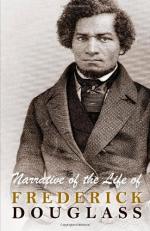
Frederick Douglass.Frederick Douglass.

speaker and publisher contributed to the nation's debate over slavery and thus to the events that led to the Civil War (1861–1865).

Born a slave on Maryland's Eastern Shore, Frederick Bailey was the son of Harriet Bailey, a slave of Captain Aaron Anthony who, according to rumor, may have been Frederick Bailey's father. In 1826, Frederick Bailey was sent to live in Baltimore, where he secretly learned to read and write. He eventually became a shipyard worker. Increasingly dissatisfied with having to turn his wages over to his owner, and with his slave status in general, Frederick Bailey escaped by taking a train from Baltimore to Philadelphia disguised as a free black sailor.

Frederick Bailey took the name Douglass from a character in Sir Walter Scott's poem "The Lady of the Lake," using it to evade slave catchers. He eventually settled in New Bedford, Massachusetts. Douglass began to attend abolitionist meetings, and after meeting abolitionist leader William Lloyd Garrison he became a major speaker on the abolitionist circuit. Some doubted that such a powerful and articulate speaker could ever have been a slave, and Douglass wrote his 1845 Narrative, which provided the actual names and locations of his former owners, in part to authenticate his slave experience. The Narrative was an immediate success and it established Douglass as a national and international figure. He gradually emerged from under Garrison's wing and in 1847 moved to Rochester, New York, where he published an antislavery newspaper the North Star (later renamed Frederick Douglass's Paper) from 1847 to 1863.

Douglass was also an early advocate of voting rights for women. He attended the 1848 Seneca Falls Convention, which is often cited as the beginning of the modern feminist movement, and was a lifelong friend of Susan B. Anthony, Lucretia Mott, and other feminist leaders.

Douglass had always strongly supported full citizenship rights for African Americans and sharply disagreed with black leaders of the 1850s, such as Henry Highland Garnet, who supported black emigration to Africa. When the Civil War broke out in 1861, Douglass fought to have the abolition of slavery made a central war aim, and to have African Americans fight in the Union Army. He believed that military service on behalf of the Union and their own freedom would greatly bolster African Americans' claims for full and equal citizenship. Douglass's sons fought in the Union Army although his own desire for a military commission was never granted. Douglass was elated by the South's defeat in April 1865 and by the subsequent abolition of slavery, but he soon found that his work was not yet finished.

During the Reconstruction Era (1865–1877) Douglass was a tireless advocate of full voting rights for African Americans and an opponent of the Ku Klux Klan and other terrorist groups that sought to deny the freed-people's constitutional rights. Douglass's support of the Fifteenth Amendment (1870), which guaranteed black males' right to vote without granting women the same right, helped cause a permanent split between the abolitionist and feminist movements. After Reconstruction came to an end with Republican President Rutherford B. Hayes's 1877 removal of the remaining federal troops from the South, Douglass remained loyal to the Republican Party while speaking out against the government's abandonment of African Americans to white supremacist southern Democratic governments.

In his later years, Douglass continued to write and speak and served as marshal and recorder of deeds in Washington, D.C., and as U.S. consul to Haiti from 1889 to 1891. He spoke out against the nation's retreat from the promises of the Reconstruction Era, including the U.S. Supreme Court's 1883 decision that invalidated most of the Civil Rights Act of 1875, which had given African Americans the right to equal treatment in public accommodations. Douglass generated some controversy when he married Helen Pitts, a white woman nearly twenty years his junior, in 1884, a year after his first wife, Anna Murray Douglass, died. When he died of a heart attack in his stately Washington D.C. home, Cedar Hill (now a national historical site) in 1895, an important period in American history ended with him. The period up to and including the Civil War had opened new opportunities for a few African Americans to play a significant role in ending slavery and engaging in a dialogue about their future. Frederick Douglass was the leading African-American spokesperson in these efforts, a man whose voice and ideas had a lasting impact on the nation.

Abolitionists; Anthony, Susan B.; Constitutional Amendments and Changes; Ku Klux Klan; Reconstruction.

Bibliography

Diedrich, Maria. Love across Color Lines: Ottilie Assing and Frederick Douglass. New York: Hill and Wang, 1999.

Douglass, Frederick. Narrative of the Life of Frederick Douglass. Mineola, NY: Dover, 1995.

McFeely, William S. Frederick Douglass. New York: Oxford University Press, 1987.

This is the complete article, containing 869 words (approx. 3 pages at 300 words per page).

More Information
  • View Douglass, Frederick Study Pack
  • 19 Alternative Definitions
  • Search Results for "Douglass, Frederick"
  • Add This to Your Bibliography
  • More Products on This Subject
    Frederick Douglass
    Champion of the suppressed people of the world, Frederick Douglass was an escaped slave who rose to... more

    Frederick Douglass
    The foremost African American abolitionist in antebellum America, Frederick Douglass (ca. 1817-1895... more


    Ask any question on Frederick Douglass and get it answered FAST!
    Answer questions in BookRags Q&A and earn points toward
    discounted or even FREE Study Guides and other BookRags products!
    Learn more about BookRags Q&A
    Copyrights
    Douglass, Frederick from Americans at War. Copyright © 2001-2006 by Macmillan Reference USA, an imprint of the Gale Group. All rights reserved.

    Join BookRagslearn moreJoin BookRags


    About BookRags | Customer Service | Report an Error | Terms of Use | Privacy Policy