 Print
Print Word
Word PDF
PDF|
This section contains 2,581 words (approx. 9 pages at 300 words per page) |

|
Born May 30, 1903
Most sources say Louisville, Kentucky
Died January 9, 1946
New York, New York
American poet, novelist, and dramatist
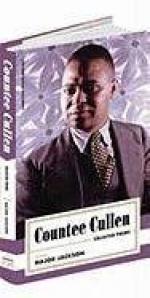
 Countee Cullen. (The Bettmann Archive/Corbis-Bettmann. Reproduced by permission.)
"If I am going to be a poet at all, I am going to be a POET and not a NEGRO poet."
One of the most promising young poets of the Harlem Renaissance, Countee Cullen was a favorite of the Talented Tenth (as defined by W.E.B. Du Bois and his followers, the most accomplished and ambitious segment of African American society) due both to his gentlemanly personal style and his highly acclaimed poetry. Cullen wished to be recognized on his own merits and struggled against being defined as a "black" poet. His writing style reflected his regard for the nineteenth-century poets of the romantic movement (romanticism was a movement in literature that promoted emotion and imagination), including...
|
This section contains 2,581 words (approx. 9 pages at 300 words per page) |
|