 Print
Print Word
Word PDF
PDF|
This section contains 3,857 words (approx. 13 pages at 300 words per page) |

|
by Alan Paton
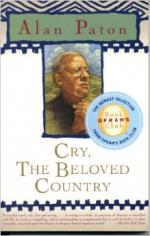
Jn 1946 Alan Paton, director of a South African student reformatory, took an extended leave of absence from his work in order to examine penal institutions in Europe and America. During his tour, he became inspired to write a story that would capture many aspects of South African life. The story, Cry, the Beloved Country, provides a view of South Africa's race relations, crime and punishment, cities and countryside, and its people. Paton, a white man of Scottish and South African heritage, tells the story through the eyes of a black country minister and a white plantation owner who find friendship despite the beginnings of the policy of racial segregation known as apartheid.
Events in History at the Time of the Novel
Agriculture and the migration to cities. "Once you think of the society as a whole, it is impossible...
|
This section contains 3,857 words (approx. 13 pages at 300 words per page) |
|