 Print
Print Word
Word PDF
PDF|
This section contains 9,321 words (approx. 32 pages at 300 words per page) |

|
Introduction
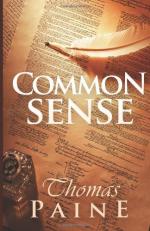
Thomas Paine's major political essays Common Sense and Rights of Man bookend the two most significant political upheavals of the late eighteenth century. The publication of Common Sense in January 1776 followed the outbreak of open hostilities between the American colonies and Great Britain in April of 1775, but preceded the signing of the Declaration of Independence on July 4, 1776. Many historians believe that it influenced American colonists to make a formal break with Britain and helped inspire America during the Revolutionary War. Rights of Man was published in two parts in 1791 and 1792. It defended the French Revolution, which was already underway. Paine's argument against monarchies was considered dangerous in Britain, where he was living at the time. Declared an outlaw, Paine fled to France where he became a citizen of the newly formed republic.
Both Common Sense and Rights...
|
This section contains 9,321 words (approx. 32 pages at 300 words per page) |
|