Chico Mendes (1944 – 1988) Brazilian Union Leader, Conservationist, and Activist
Francisco Alvo Mendes Filho, known as Chico Mendes, was a defender of the tropical rain forests and a champion of the concept of sustainable harvest as a means of saving and protecting that threatened ecosystem. As president of the local Rural Workers Union, representing rubber tappers in his native Brazil, Mendes became too powerful and politically influential for ranchers who wanted to turn the rain forest into grazing land for their cattle. The struggle between them ended in 1988, when Mendes was assassinated.
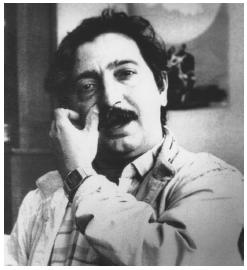
Chico Mendes. (Corbis-Bettmann. Reproduced by permission.)
Chico Mendes was born in 1944 in Acre Province of Brazil, along the upper reaches of the Amazon River not far from the border with Peru and Bolivia. Following his father, he was a seringueiro, a rubber tapper. He farmed a small clearing, but relied on the sale of rubber from several hundred native rubber trees in the rain forest itself to provide income for him and his family. Mendes inherited the land and the trees from his father who had begun tapping them in the 1930s. Two long v-shaped cuts made with care in the bark of each rubber tree would yield one or two cups of the milky latex sap each week, which could then be dried to make natural rubber.
Mendes would also collect other natural forest products, such as fruits and Brazil nuts, to supplement his income. There are approximately 100,000 other rubber tappers living throughout the rain forest, and this is what they do as well. It is sustainable harvest which does not destroy the forest and provides a substantial income. On average, logging yields a one-time profit of $1,290 per acre; if the land is converted to cattle pasture, it yields an income of about $61 per acre per year. The sustainable yield of forest products, on the other hand, provides an income of $2,762 per acre per year.
Land speculators and large cattle ranching concerns are more interested in the short-term profits they can realize by cutting down the forest, selling the timber, and converting the land for cattle grazing. Ranching requires huge tracts of land, and satellite images indicate that in 1988 alone about 30 million acres of forest was destroyed for this industry. Low land prices, low tax rates, and direct subsidies to ranchers further encourage this practice. The Brazilian government had further aided ranching by building and maintaining roads into the forest, which are then used to ship cattle to market.
Chico Mendes fought to end this destruction of the tropical rain forest. He made many political inroads, gaining influence with the Interior Ministry as well as the public. His main adversary was Darli Alves da Silva, a cattle rancher who had begun acquiring forest land in Acre through strong-arm tactics and he vowed that Mendes would not live out 1988. Mendes had helped establish several forest reserves that year, thus all but ending forest clearing in Acre.
Mendes, his wife, and two policemen assigned to guard him were playing cards at his home on the night of December 22, 1988. Mendes stepped outside for a moment and was killed by a shotgun blast to the chest from a waiting assassin. The local police claimed no clues or suspects in the case, but local and international protests forced the Brazilian government to enter the investigation. Evidence led them to the ranch of Darli da Silva. In the summer of 1989 indictments for murder were handed down to Darli da Silva, his son Darci Pereia da Silva, and Jerdeir Pereia, one of da Silva's ranch hands. Testimony indicated that Darli ordered the murder and that Darci supervised as Jerdeir carried out the plot. There is evidence that other prominent ranchers may have been involved in the plot, and they are currently under investigation.
Resources
Books
Dwyer, A. Into the Amazon: The Struggle for the Rain Forest. San Francisco: Sierra Club Books, 1990.
Revkin, A. The Burning Season: The Murder of Chico Mendes and the Fight for the Amazon Rain Forest. New York: Houghton Mifflin, 1991.
Periodicals
Willrich, M. "Murder in Acre." Amicus Journal 11 (Spring 1989): 10–13.
This is the complete article, containing 683 words
(approx. 2 pages at 300 words per page).