 Print
Print Word
Word PDF
PDF|
This section contains 3,038 words (approx. 11 pages at 300 words per page) |

|
Born November 25, 1835
Dunfermline, Scotland
Died August 11, 1919
Lenox, Massachusetts
Industrialist and philanthropist
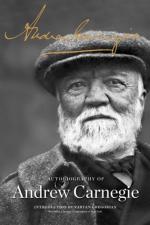
 Andrew Carnegie. AP/Wide World Photos.
"Concentrate your energies, your thoughts and your capital. The wise man puts all his eggs in one basket and watches the basket."
Andrew Carnegie stands as a symbol of the idea that immigrants could come to the United States and make a vast fortune. In Carnegie's case, he came to the United States from his native Scotland at age thirteen and worked his way from poverty to one of the great fortunes of the world based on manufacturing steel. In retirement, Carnegie gave away several hundred million dollars, a significant portion of his fortune during his lifetime. He financed public libraries throughout the United States as well as donated money to universities and bought organs for churches.
The Industrial Revolution
In one respect, Carnegie shared an experience with...
|
This section contains 3,038 words (approx. 11 pages at 300 words per page) |
|