 Print
Print Word
Word PDF
PDF|
This section contains 3,497 words (approx. 12 pages at 300 words per page) |

|
by Dee Brown
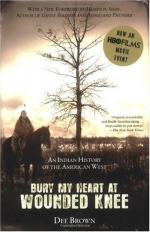
Dee Brown, a librarian by profession, researched and wrote numerous histories of the American West using such primary sources as diaries, letters, recorded speeches, and transcriptions to capture the flavor of the times. Brown published Bury My Heart at Wounded Knee: An Indian History of the American West in 1970, a time when the U.S. government was advocating a new policy of self-determination for American Indians, and when Indians themselves had launched their own civil rights movement. Bury My Heart at Wounded Knee was warmly received at the time as a much needed alternate perspective of how the West had been "won."
Events in History at the Time the Narrative Takes Place
Identity and place. Bury My Heart at Wounded Knee details the broken promises, devastating battles, occasional victories, and the loss of leadership and...
|
This section contains 3,497 words (approx. 12 pages at 300 words per page) |
|