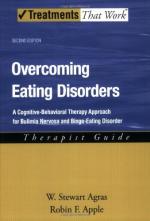
Bulimia Nervosa
Definition
Bulimia (pronounced bu-LIM-ee-uh) nervosa is a serious and sometimes life-threatening eating disorder that affects primarily young women. Bulimics (people who have bulimia) go through cycles of binging and purging. Binging is the consumption of abnormally large amounts of food in a very short period of time, and purging is the elimination of food by some unusual activity. Bulimics use fasting (not eating), excessive exercise, vomiting, or laxatives to purge themselves of food. Bulimia is partly caused by excessive concern about weight control and self-image. It is considered to be a psychiatric (mental) disorder.
Description
Bulimia nervosa is a serious health problem for over two million adolescent girls and young women in the United States. In the most extreme cases, bulimia can cause severe bodily damage or even death. For example, in rare cases, binging can cause the stomach to break open. Purging can be dangerous because the body loses nutrients it needs to function properly. The loss of potassium, for example, can cause heart failure.
Vomiting is a common source of problems. When a person vomits, he or she brings up partially digested food and stomach acid. The acid is very strong and can burn the digestive tract, the mouth, and the lips. It can also damage the teeth. Binging and purging also disrupts the menstrual cycle.
Most bulimics know that their eating patterns are not normal, but they feel unable to change their behavior. Their binging and purging is done in secrecy so that family and friends often do not even know about their disorder. Some bulimics may turn to other ways of solving their problems, such as drugs and alcohol. Many develop other mental disorders, such as depression (see depressive disorders) and anxiety. In many cases, a physician or mental health professional must be consulted.
Most bulimics are females in their teens or early twenties; males of the same age range make up about 5 to 10 percent of bulimics. People of all races develop the disorder. The majority of bulimics who receive treatment, however, are white.
Causes
The cause of bulimia nervosa is unknown. Both genetic and social factors are probably responsible. Bulimia does appear to run in families, so a child is at risk for bulimia if another family member already has the disorder.
An important factor contributing to bulimia is the social pressure for women to be thin. Advertisements, television programs, and motion pictures are full of images depicting beautiful, successful women who are very thin. Young women often feel that they, too, need to be slender in order to be attractive and ultimately accepted in society. For young women with these feelings, bulimia may be the only way to achieve such standards.
For some young women, the social pressure to maintain thinness may come from family, friends, or the social activities in which they participate. For instance, modeling, dancing, and gymnastics tend to emphasize an importance on body size and shape.
Symptoms
The following are typical symptoms of bulimia nervosa:
- Eating large amounts of food uncontrollably (binging)
- Vomiting, using laxatives, or using other methods to eliminate food (purging)
- Excessive concern about body weight
- Depression or changes in mood
- Irregular menstrual periods
- Unusual dental problems, swollen cheeks or glands, heartburn, or bloating (swelling of the stomach)
Diagnosis
Bulimia is often difficult to diagnose because patients often try to hide their condition and may deny they have a problem. Early diagnosis, however, is important. The sooner the condition is diagnosed, the better the chance it can be treated. One step in diagnosis is a physical examination. Because the symptoms of bulimia are similar to those of other diseases, a doctor needs to make sure that a patient is not suffering from some other physical problem.
Excessive concern about body weight along with repeated episodes of binging and purging are symptoms of bulimia nervosa. (Oscan Burriel/Latin Stock/Science Photo Library. Reproduced by permission of Custom Medical Stock Photo.)
According to the American Psychiatric Association, there are four signs that indicate bulimia. They are:
- Repeated episodes of binge eating
- Repeated use of purging devices, such as vomiting
- A feeling of lack of control over binge eating
- An ongoing concern over body shape and weight
Treatment
Bulimia nervosa is usually treated with a combination of drugs and counseling. Drugs are used to help the patient deal with his or her mental concerns. For example, anti-depressants may be used to help a person feel better about himself or herself.
Many types of counseling may be needed in the treatment of bulimia. Individual and group therapy can help patients understand the cause of their disorder, which may help patients learn to deal with their problems in ways other than binging and purging. Family counseling is also valuable.
Alternative Treatment
Light therapy may prove helpful in treating bulimia. Some people become depressed when there is an absence of light. The winter months can be especially difficult. Light therapy involves the use of artificial light to improve a patient's mood. Massage and hydrotherapy (water therapy) are also recommended for the treatment of bulimia. These techniques may help a person feel better about the shape and appearance of his or her own body.
Prognosis
Bulimia may become chronic. That is, it can turn into an ongoing problem that lasts for many years. In such cases, it can cause a number of health problems, including seizures, irregular heartbeat, and thin bones. On rare occasions, bulimia can be fatal. Early treatment is the key to a promising prognosis. People who learn to deal with their problems of self-image can often be cured of the condition and can go on to lead normal, productive lives.
Prevention
Because bulimia is a psychiatric disorder with many possible causes, it is difficult to identify methods of prevention. Many suggest that the reason for eating disorders comes from society at large and that until the images of women in the media are changed to become more realistic, eating disorders such as bulimia, will continue to exist.
Bulimia Nervosa: Words to Know
- Binge:
- To consume large amounts of food without control in a short period of time.
- Purge:
- To rid the body of food by vomiting, the use of laxatives, or some other method.
Is It Barbie's Fault?
The causes of bulimia are many and complex. Could the Barbie doll be one of those causes? Some researchers think so. They point out that Barbie dolls have been one of the most popular toys ever developed and that an untold number of young girls have grown up playing with Barbie. So, in some ways, Barbie may have become a role model for young girls.
But how realistic is Barbie? For years critics have complained that Barbie's measurements are exaggerated. They argue that Barbie's waist was so small and breasts so large that a woman with the same measurements would not be able to stand. The fear is that young girls may begin to think that they should look like Barbie. And if their idea of beauty is being molded by a doll who was incredibly thin and unnaturally shaped, the message may lead to dangerous behavior such as anorexia or bulimia.
Scientists are also wondering if toys can affect the way boys view their bodies. For example, GI Joe has long been a very popular action figure among young boys. Unlike Barbie, GI Joe had a relatively realistic design. For example, the size of the doll's biceps (upper arm) was equivalent to 11 and one-half inch biceps on an adult male. This size falls within normal range for the average adult male.
In 1997, however, a new version of GI Joe was introduced called GI Joe Extreme. The new toy's dimensions increased so that the adult equivalent of his biceps would now measure 26 inches around, which is unnaturally exaggerated. It is interesting to note that also in 1997, Mattel, the toy company that produces both Barbie and GI Joe, announced that it was changing the shape of Barbie. In efforts to create a more realistic Barbie, the new and improved doll has smaller breasts and a wider waist.
For More Information
Books
Cassell, Dana K. The Encyclopedia of Obesity and Eating Disorders. New York: Facts on File, 1994.
Jablow, Martha M. A Parent's Guide to Eating Disorders and Obesity. New York: Dell Publishing, 1992.
Kubersky, Rachel. Everything You Need to Know about Eating Disorders. New York: The Rosen Publishing Group, 1992.
Organizations
American Anorexia/Bulimia Association. 165 West 46th Street, Suite 1108 New York, NY 10036. (212) 575–6200.
Anorexia Nervosa and Related Eating Disorders. PO Box 5102, Eugene, OR 97405. (541) 344–1144.
Center for the Study of Anorexia and Bulimia. 1 W. 91st Street, New York, NY 10024. (212) 595–3449.
Eating Disorder Awareness & Prevention. 603 Steward St., Suite 803, Seattle, WA 98101. (206) 382–3587.
National Association of Anorexia Nervosa and Associated Disorders. Box 7, Highland Park, IL 60035. (708) 831–3438.
National Eating Disorders Organization. 6655 South Yale Avenue, Tulsa, OK 74136. (918) 481–4044.
Web Sites
Anorexia Nervosa and Related Eating Disorders, Inc. [Online] http://www.anred.com (accessed on June 15, 1999).
"A Teen Guide to Eating Disorders." [Online] http://kidshealth.org. (accessed on October 5, 1999).
"Understanding Eating Disorders." [Online] http://www.ndmda.org. (accessed on June 15, 1999).
This is the complete article, containing 1,470 words
(approx. 5 pages at 300 words per page).