BookRags.com Literature Guides Literature
Guides
Criticism & Essays Criticism &
Essays
Questions & Answers Questions &
Answers
Lesson Plans Lesson
Plans
My Bibliography Periodic Table U.S. Presidents Shakespeare Sonnet Shake-Up
Research Anything:        
History | Encyclopedias | Films | News | Create a Bibliography | More... Login | Register | Help

Not What You Meant?  There are 12 definitions for Costa.

Bryophytes

Print-Friendly  Order the PDF version  Order the RTF version
About 6 pages (1,910 words)
Bryophyte Summary

Bookmark and Share Questions on this topic? Just ask!

Bryophytes

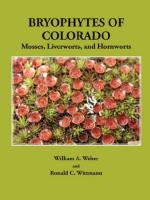
Plant scientists recognize two kinds of land plants: bryophytes (nonvascular land plants) and tracheophytes (vascular land plants). Bryophytes are small, herbaceous plants that grow closely packed together in mats or cushions on rocks or soil or as epiphytes on the trunks and leaves of forest trees.Bryophytes are distinguished from tracheophytes by two important characteristics. First, in all bryophytes the ecologically persistent, photosynthetic phase of the life cycle is the haploid, gametophyte generation rather than the diploid sporophyte; bryophyte sporophytes are very short-lived, are attached to and nutritionally dependent on their gametophytes, and consist of only an unbranched stalk, or seta, and a single, terminal sporangium. Second, bryophytes never form xylem tissue, the special lignin-containing, water-conducting tissue that is found in the sporophytes of all vascular plants. At one time, all bryophytes were placed in a single phylum, intermediate in position between algae and vascular plants. Modern studies of cell ultra-structure and molecular biology, however, confirm that bryophytes comprise three separate evolutionary lineages, today recognized as mosses (phylum Bryophyta), liverworts (phylum Marchantiophyta), and hornworts (phylum Anthocerotophyta). Following a detailed analysis of land plant relationships, Paul Kenrick and Peter R. Crane proposed that the three groups of bryophytes represent a structural level in plant evolution, identified by their monosporangiate life cycle.

This is a free page. This page contains 201 words. This article contains 1,910 words (approx. 6 pages at 300 words per page).

Read the rest of this Article with our Bryophytes Access Pass.

Ask any question on Bryophyte and get it answered FAST!
Answer questions in BookRags Q&A and earn points toward
discounted or even FREE Study Guides and other BookRags products!
Learn more about BookRags Q&A
Copyrights
Bryophytes from Macmillan Science Library: Plant Sciences. Copyright © 2001-2006 by Macmillan Reference USA, an imprint of the Gale Group. All rights reserved.

Join BookRagslearn moreJoin BookRags


About BookRags | Customer Service | Report an Error | Terms of Use | Privacy Policy