Forgot your password?  

Not What You Meant?  There are 10 definitions for Tycho.  Also try: Tyco.

Brahe, Tycho (1546-1601) | Research & Encyclopedia Articles

Print-Friendly   Order the PDF version   Order the RTF version
About 3 pages (920 words)
Tycho Brahe Summary


Brahe, Tycho (1546-1601)

Danish astronomer

Tycho Brahe was one of the most colorful astronomers in history. Born in Denmark, Brahe was "adopted" (some say kidnapped) by his childless uncle at the age of one. Either way, his father, a Swedish nobleman, did not pursue the matter

Tycho Brahe. New York Public Library Picture Collection.Tycho Brahe. New York Public Library Picture Collection.

(Brahe's given name was "Tyge," but the Latinized version is more common.)

Brahe received an excellent education. At the age of 13 he entered the University of Copenhagen, where he studied rhetoric and philosophy. He was well on his way toward a career in politics when he witnessed an eclipse of the Sun on August 21, 1560. Brahe spent the next two years studying mathematics and astronomy. He moved on to the University of Leipzig in 1562 where a tutor tried to influence him to study law, but Brahe refused to be diverted.

In August 1563, he made his first recorded observation, a close grouping between Jupiter and Saturn. (It was not until many years that Galileo first used a telescope to make astronomical observations; Brahe's precise work was done with the naked eye.) This was the turning point of his career. He was perturbed to note that this event occurred a month before its predicted date, and he began to buy astronomical instruments that would allow him to make very precise measurements so he could produce more accurate tables of data. He also developed interests in alchemy and astrology (which he considered a science) and began to cast horoscopes that, if nothing else, generated some income.

In November 1572, a supernova burst into view in the constellation of Cassiopeia, and Brahe was enthralled. The new star became brighter than Venus and was visible for eighteen months. He described it (along with its astrological "significance") with such detail in a book, the new star became known as "Tycho's star."

The book did three things: the title De Nova Stella (Concerning the new star) linked the name nova to all exploding stars. In addition, Brahe had been unable to make a parallax measurement for the nova. That indicated that it was much more distant than the Moon, which was a crushing blow to Aristotle's teachings that the heavens were perfect and unchanging. The third accomplishment was in establishing Brahe's reputation as an astronomer. The book was almost not produced. Initially, Brahe felt it was beneath his dignity as a nobleman to publish, but he was soon convinced otherwise.

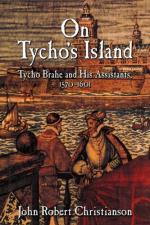
Brahe's arrogance was legendary. At the age of nineteen, he was involved in a duel over a mathematical point, during which he lost his nose. He spent the rest of his life wearing a prosthesis. Fortunately, one of the few individuals not alienated by Brahe was Frederick II, the king of Denmark. In 1576, this patron of science gave Brahe a small island called Hveen, subsidized the building of an observatory there, and endowed Brahe with an annual payment. This became the first real astronomical observatory in history, and Brahe, always mindful of his noble background, saw to it that no expense was spared. The principal building, Uraniborg (Castle of the heavens), was the main residence; next to it was built the main observatory, Stjerneborg (Castle of the stars).

In 1577, a bright comet was visible, and Brahe observed it with great care. Measurements showed that it, too, was further than the moon and could not be atmospheric phenomena as Aristotle taught. Worse, Brahe reluctantly came to the conclusion that the path of the comet was not circular but elongated. This meant it would have to pass through the "spheres" that carried the planets around the sky, which would be impossible unless the spheres did not exist.

This concept troubled Brahe, who rejected the Sun-centered theory of Nicholas Copernicus because it not only violated scripture, it contradicted the teachings of Ptolemy. Brahe also reasoned that if Copernican theory was correct, he should have been able to detect stellar parallax as the year passed, but he could not.

Brahe tried to reconcile his beliefs with his observations by proposing a solar system in which all the planets orbited around the Sun, but the Sun orbited around the earth (to account for a year), and the celestial sphere made a single rotation each day. This would follow Copernicus's theory, do away with the Greeks' planetary spheres, and still keep the earth at its preeminent position. The Tychonic Theory was almost entirely ignored.

Brahe spent 20 years at Hveen, making exceptionally accurate observations. He used devices such as a huge quadrant with a radius of 6 feet (1.83 m), sextants, a bipartite arc, astrolabes, and various armillae. His measurements were the most precise that could be made without the aid of a telescope. He made corrections for nearly every known astronomical measurement and made Pope Gregory's calendar reform in 1582 possible. (Brahe himself did not adopt the new calendar until 1599.)

Frederick II died in 1588. His son, Christian IV, was only 11, so the country was ruled by regents, who left Brahe to his own devices. When Christian came of age in 1596, he quickly lost patience with the expensive, haughty astronomer, and Brahe was relieved of his royal duties the following year.

Brahe moved to Prague, where he resumed observing. As an assistant he employed a young German named Johannes Kepler, to whom he gave all his observations on Mars and the task of preparing tables of planetary motion. This would turn out to be the most significant decision of his life, as Kepler used the data to determine the elliptical nature of planetary motion.

This is the complete article, containing 920 words (approx. 3 pages at 300 words per page).

More Information
  • View Brahe, Tycho (1546-1601) Study Pack
  • 10 Alternative Definitions
  • Search Results for "Brahe, Tycho (1546-1601)"
  • More Products on This Subject
    Tycho Brahe
    The Danish astronomer Tycho Brahe (1546-1601) carried pretelescopic astronomy to its highest perfec... more

    Tycho Brahe
    Tycho Brahe was one of the most colorful astronomers in history. Born on December 14, 1546, in Denm... more


    Ask any question on Tycho Brahe and get it answered FAST!
    Answer questions in BookRags Q&A and earn points toward
    discounted or even FREE Study Guides and other BookRags products!
    Learn more about BookRags Q&A
    Copyrights
    Brahe, Tycho (1546-1601) from World of Earth Science. ©2005-2006 Thomson Gale, a part of the Thomson Corporation. All rights reserved.

    Join BookRagslearn moreJoin BookRags

    Join BookRagslearn moreJoin BookRags