BookRags.com Literature Guides Literature
Guides
Criticism & Essays Criticism &
Essays
Questions & Answers Questions &
Answers
Lesson Plans Lesson
Plans
My Bibliography Periodic Table U.S. Presidents Shakespeare Sonnet Shake-Up
Research Anything:        
History | Encyclopedias | Films | News | Create a Bibliography | More... Login | Register | Help


Biotechnology

Print-Friendly  Order the PDF version  Order the RTF version
About 6 pages (1,870 words)
Biotechnology Summary

Bookmark and Share Questions on this topic? Just ask!

Not all forms of biotechnology depend on microorganisms. Hybridization is an example. Farmers long ago learned that they could control the types of animals bred by carefully selecting the parents. In some cases, they actually created entirely new animal forms that do not occur in nature. The mule, a hybrid of horse and donkey, is such an animal.

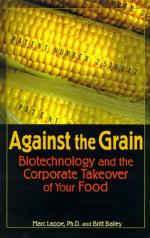
Hybridization has also been used in plant growing for centuries. Farmers found that they could produce food plants with any number of special qualities by carefully selecting the seeds they plant and by controlling growing conditions. As a result of this kind of process, the 2–3-in (5.1–7.6-cm) vegetable known as maize has evolved over the years into the 12-in (30-cm), robust product called corn. Indeed, there is hardly a fruit or vegetable in our diet today that has not been altered by long decades of hybridization.

Until the late nineteenth century, hybridization was largely a trial-and-error process. Then the work of Gregor Mendel started to become known. Mendel's research on the transmission of hereditary characteristics soon gave agriculturists a solid factual basis on which to conduct future experiments in cross-breeding.

This is a free page. This page contains 180 words. This article contains 1,870 words (approx. 6 pages at 300 words per page).

Read the rest of this Article with our Biotechnology Access Pass.

Ask any question on Biotechnology and get it answered FAST!
Answer questions in BookRags Q&A and earn points toward
discounted or even FREE Study Guides and other BookRags products!
Learn more about BookRags Q&A
Copyrights
Biotechnology from Environmental Encyclopedia. ©2005-2006 Thomson Gale, a part of the Thomson Corporation. All rights reserved.

Join BookRagslearn moreJoin BookRags


About BookRags | Customer Service | Report an Error | Terms of Use | Privacy Policy