
 Print
Print Word
Word PDF
PDF|
This section contains 3,830 words (approx. 13 pages at 300 words per page) |

|
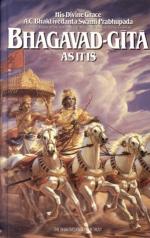
BHAGAVADGĪTĀ. The Bhagavadgītā is perhaps the most widely read and beloved scripture in all Indian religious literature. Its power to counsel and inspire its readers has remained undiminished in the almost two thousand years since its composition.
The Bhagavadgītā (Song of the Blessed Lord) is sacred literature, holy scripture—it is a text that has abundant power in its persistence and its presence. The pious Hindu, even if his piety is mild, will inevitably have access to the book or will be able to recite, or at least paraphrase, a few lines from it. The devout turn to it daily; they read it ritually, devotionally, with a sense of awe. The text is intoned during the initiation ceremony wherein one becomes a saṃnyāsin (renunciant); teachers and holy men expound upon it; professors translate it and...
|
This section contains 3,830 words (approx. 13 pages at 300 words per page) |
|



