BookRags.com Literature Guides Literature
Guides
Criticism & Essays Criticism &
Essays
Questions & Answers Questions &
Answers
Lesson Plans Lesson
Plans
My Bibliography Periodic Table U.S. Presidents Shakespeare Sonnet Shake-Up
Research Anything:        
History | Encyclopedias | Films | News | Create a Bibliography | More... Login | Register | Help

Search "Bartolomeu Dias"

Contents Navigation
Not What You Meant?  There are 34 definitions for Diaz.  Also try: Dias.

Bartolomeu Dias

Print-Friendly  Order the PDF version  Order the RTF version
About 3 pages (889 words)
Bartolomeu Dias Summary

Bookmark and Share Questions on this topic? Just ask!

Bartolomeu Dias

Born c. 1450,
Portugal
Died 1500,
Off the Cape of Good Hope, Africa

Bartolomeu Dias

Bartolomeu Dias’s pioneering voyage around the southern tip of Africa, which came to be called the Cape of Good Hope, opened a sea route from Europe to India. This was an important advance for trade in the fifteenth century. Ironically, Dias himself perished in a storm off the Cape of Good Hope several years after he discovered it.

The voyages of explorer Diogo Cão in 1485 had taken Portuguese ships far down the western coast of Africa to Cape Cross, almost to the southern tip of the continent. King John II of Portugal, who was attempting to revive his country’s leadership in voyages of exploration, decided to send a new expedition to determine if it was possible to sail all the way around Africa. For commander of the voyage he chose Bartolomeu Dias, a knight of the royal household. Dias was descended from an old seafaring family and had led many trading voyages to Guinea on the west coast of Africa.

Attempts voyage around Africa

Dias’s expedition included two small sailing ships and a supply ship. The solution to the problem of provisions for long-distance journeys, the supply ship would anchor on a coastline along the way to wait for the other ships in a fleet; on the return trip, these ships would be able to take on new provisions from the supply ship.

The expedition left Lisbon, Portugal, in August 1487. By December, it had reached Walvis Bay, in what is now Namibia, without much difficulty. South of the bay the ships encountered strong head winds, which drove them out to sea, away from the sight of land. They were driven south for 13 days before they were able to turn and head eastward to regain the shore. But after sailing for some time they still did not sight any land.

Sights land

Dias realized that the wind must have carried the ships beyond the southern tip of Africa and that in order to regain the continent they would have to head north. Accordingly they turned northward, and on February 3, 1488, they sighted land. Since the shoreline ran in a northeastward direction, Dias concluded that they had indeed rounded the southern cape of the continent.

The Portuguese found themselves in a bay from which they could see African herdsmen with their cows. For this reason, Dias named the place Bahia dos Vaqueiros, or Cowboy Bay. This body of water, which lies off the south coast of South Africa, is now known as Mossel Bay. Although his crew objected to going farther into unknown territory, Dias insisted on continuing eastward up the coast. But when the ships reached the Great Fish River, where the south African coast starts heading north, his anxious crew forced him to turn back.

Discovers Cape of Good Hope

On the way back to Portugal in May 1488, Dias followed the shoreline of the continent so that he could see the great cape that is the southern tip. He decided to call it Cabo Tormentoso, or Cape of Storms, which is indeed an accurate name—and a prophetic one, as it turned out. Continuing the voyage home, Dias stopped on the coast of Angola to take on provisions from the supply ship anchored there. He reached Lisbon in December 1488, after an absence of 17 months and 17 days.

The Cape of Storms was later renamed the Cape of Good Hope, although historians are not certain about the origin of the name. According to one authority, John II wanted a name that represented the hope of reaching India by sea; another suggests that Dias originally named it Cabo da Bõa Esperança—the Cape of Good Hope.

Portuguese seek India route

Dias continued to serve the king in nautical affairs. On March 4, 1493, he was sent out in a rowboat to talk to the captain of a Spanish ship that had just anchored in Lisbon harbor. The captain was Christopher Columbus (see entry), who told Dias about the new land he had found on the other side of the Atlantic. Columbus’s discovery did not interest the Portuguese; they were more excited about the possibilities opened up by Dias’s expedition around the Cape. They now knew it was possible to sail around Africa to get to India, an important advance for trade between Europe and India. As a result of Dias’s discovery, the new king, Manuel I, commissioned Vasco da Gama (see entry) to lead an expedition to follow up on Dias’s earlier voyage by sailing all the way to India.

Sails with Cabral

Upon the successful return of da Gama, Manuel I immediately prepared a major expedition to continue explorations. The commander was a young nobleman, Pedro Cabral; Dias captained one of the 13 ships in the fleet. Leaving Lisbon on March 9, 1500, Cabral sailed much farther west than da Gama alone had ventured. On April 22 the Cabral party was rewarded by the sight of the coast of a previously unknown land—Brazil.

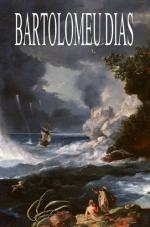
The expedition turned east and recrossed the Atlantic. On the way around the Cape of Good Hope, they ran into bad weather. During the storm, three of the ships sank, including the one commanded by Dias. The Portuguese explorer drowned along with his crew off the south African coast, which he had been the first to navigate.

This is the complete article, containing 889 words (approx. 3 pages at 300 words per page).

More Information
  • View Bartolomeu Dias Study Pack
  • 34 Alternative Definitions
  • Search Results for "Bartolomeu Dias"
  • Add This to Your Bibliography
  • More Products on This Subject
    Dias, Bartolomeu
    (born &circa; 1450—died May 29, 1500, at sea, near Cape of Good Hope) Portuguese navigator an... more

    Bartholomeu Dias
    Bartholomeu Dias definitely lived up to that image. He was a very interesting and adventurous pers... more


    Ask any question on Bartolomeu Dias and get it answered FAST!
    Answer questions in BookRags Q&A and earn points toward
    discounted or even FREE Study Guides and other BookRags products!
    Learn more about BookRags Q&A
    Copyrights
    Bartolomeu Dias from Explorers and Discoverers. ©2005-2006 by U•X•L. U•X•L is an imprint of Thomson Gale, a division of Thomson Learning, Inc. All rights reserved.

    Join BookRagslearn moreJoin BookRags


    About BookRags | Customer Service | Report an Error | Terms of Use | Privacy Policy