BookRags.com Literature Guides Literature
Guides
Criticism & Essays Criticism &
Essays
Questions & Answers Questions &
Answers
Lesson Plans Lesson
Plans
My Bibliography Periodic Table U.S. Presidents Shakespeare Sonnet Shake-Up
Research Anything:        
History | Encyclopedias | Films | News | Create a Bibliography | More... Login | Register | Help

Search "Ballard, Robert Duane (1942- )"

Contents Navigation
 
Not What You Meant?  There are 41 definitions for Isis.  Also try: Ballard.

Ballard, Robert Duane (1942- )

Print-Friendly  Order the PDF version  Order the RTF version
About 2 pages (641 words)
Robert Ballard Summary

Bookmark and Share

Ballard, Robert Duane (1942- )

American oceanographer and archaeologist

Robert Ballard has participated in over 100 deep-sea expeditions during his career. Ballard is perhaps most well known for leading the 1985 French-American expedition that discovered the wreckage of the RMS Titanic. However, Ballard has made many great contributions to the fields of oceanography, marine geology, and underwater archaeology. He is a pioneer in the use of underwater submersibles in the location and survey of deep-water subjects.

Ballard was born in Wichita, Kansas, but his family soon moved to San Diego, California. He developed a lifelong love of the ocean as a child. When he was a teenager, he traded studying creatures in tidal pools for SCUBA lessons. Ballard decided to pursue ocean research as a career when he entered college. He attended the University of California, earning dual undergraduate degrees in geology and chemistry in 1965. He trained dolphins for a local marine theme park while pursuing postgraduate studies at the University of Hawaii. Ballard was a member of the Army Reserve Officer Training Corps, but petitioned for transfer to the Navy in 1967. The U.S. Navy granted his request and assigned him to the Deep Submergence Laboratory at Woods Hole, Massachusetts. He completed his graduate studies at the University of Rhode Island, receiving a Ph.D. in geophysics and marine geology in 1974.

The first major research expedition of Ballard's career was the first manned exploration of the Mid-Atlantic Ridge, a large underwater mountain range in the Atlantic Ocean, in 1973–1974. The survey mapped some of the most varied terrain of the ocean floor. In 1977, Ballard was a member of research team that used small submersibles to explore the waters near the Galapagos Islands. Dr. Ballard and his crew observed ecosystems that developed around underwater hot springs. Two years later, off the coast of Baja California, Ballard found underwater volcanoes that ejected hot, mineral rich fluids. Ballard and his team studied the effects of these vents on deep marine life and ocean water chemistry.

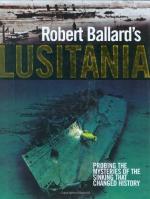
In 1985, Ballard and his team turned their attention to finding one of the most famous shipwrecks, the RMS Titanic, a British luxury steamship that sank in the North Atlantic in 1912. Experienced using small manned submersibles, such as ALVIN, Ballard designed other survey apparatus, such as the ARGO-JASON, a remote controlled deep-sea imaging system. In order to gain access to the most sophisticated equipment for his search for the Titanic, Ballard was first assigned to conduct deep-sea reconnaissance work for the United States Navy, finding and evaluating the site of a sunken U.S. nuclear submarine. After completing his work for the Navy, Ballard used the remaining expedition time for his join French and American research team to locate the Titanic. The team located the wreckage of the British steamer just days before their voyage was to end. Ballard used the submersible JASON to photograph the site. In addition, Ballard and his team designed a small accessory robotic device, named JASON Jr., which could explore the inside of the ship by remote control. Using this array of sophisticated diving equipment, and small submersibles, Ballard also found the wrecks of the USS Yorktown, the German battleship Bismarck, and part of the lost fleet of Guadalcanal. He also led an expedition to photograph and explore the British luxury liner, Lusitania.

Remaining on the cutting edge of under-sea research and exploration, Ballard left Woods Hole in 1997 to pursue career interests in underwater archaeology. Combining his knowledge of deep-water oceanography, and a passion for historic preservation, Ballard accepted a post to head the Institute for Exploration in Mystic, Connecticut. That year, Ballard, using the Navy's nuclear research submarine, NR-1, explored a complex of 2,000 year-old shipwrecks in the Mediterranean Sea. Because of the depth at which the wrecks settled, the site remained perfectly preserved. In 2000, Ballard was named National Geographic's Explorer-in-Residence.

Deep Sea Exploration

This is the complete article, containing 641 words (approx. 2 pages at 300 words per page).

More Information
  • View Ballard, Robert Duane (1942- ) Study Pack
  • 41 Alternative Definitions
  • Search Results for "Ballard, Robert Duane (1942- )"
  • Add This to Your Bibliography
  • More Products on This Subject
    Robert Ballard
    Robert D. Ballard (born 1942) has made some of the most important underwater discoveries in the lat... more

    Ballard, Robert
    (born June 30, 1942, Wichita, Kansas, U.S.) American oceanographer and marine geologist whose pione... more


    Copyrights
    Ballard, Robert Duane (1942- ) from World of Earth Science. ©2005-2006 Thomson Gale, a part of the Thomson Corporation. All rights reserved.

    Join BookRagslearn moreJoin BookRags


    About BookRags | Customer Service | Report an Error | Terms of Use | Privacy Policy