 Print
Print Word
Word PDF
PDF|
This section contains 1,919 words (approx. 7 pages at 300 words per page) |

|
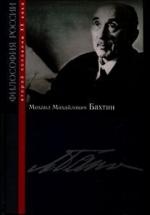
Mikhail Mikhailovich Bakhtin was a Russian philosopher, philologist, and historian of culture. In opposition to rationalism and, in general, to the modern European (monologic) epistemology, he grounded a personalistic understanding of being as the co-being (event) of interrelations of "I" and the "other" (thou) and developed a corresponding dialogic (and/or polyphonic) approach in the capacity of the uniquely adequate method of the particular humanitarian sciences and—more broadly—of philosophical thought.
The Works
Bakhtin wrote his main works in the period from the 1920s to the beginning of the 1950s, but because of the political conditions of the time, biographical reasons, and the peculiarities of the texts themselves (some of them consisting of unfinished archival manuscripts), they were published (except in one case) either in the final years of the author's life or after his death.
Bakhtin was born in Orel...
|
This section contains 1,919 words (approx. 7 pages at 300 words per page) |
|