
Bacon, Francis
BACON, FRANCIS (1561–1626), Lord Verulam, Viscount St. Albans; English statesman, essayist, and philosopher of science. A major political figure in early Stuart England, Bacon drew a visionary picture of the role and practices of the science of the future. This science was to be experimental, and Bacon advocated setting up public institutions for its pursuit. Written in the conviction that science, properly conducted, would lead to the improvement of the material conditions of life, his major works are at the same time philosophical discourses and recommendations for public policy.
Bacon was born of distinguished parents. His father was lord keeper of the great seal to Elizabeth I, and his mother was the niece of Lord Burghley, Elizabeth's lord treasurer. In 1573 he entered Trinity College, Cambridge, and two years later was enrolled briefly as a law student at Gray's Inn. His father's death in 1579 left Francis, the youngest son, comparatively poor, and he embarked on a career in law and politics. In 1584 he became a member of the House of Commons, where he sat until his elevation to the House of Lords in 1618. Despite wide knowledge, great ability, and influential friends, Bacon never achieved high office under Elizabeth, but after the accession of James I in 1603 he became successively king's counsel, solicitor general, attorney general, lord keeper, and lord chancellor. Then, in 1620, he was found guilty of taking a bribe and was removed from public office. He spent the remainder of his life working on a vast project: to provide both a new foundation for knowledge and a program for its acquisition.
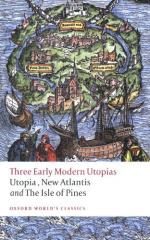
This project had occupied him since he first entered Parliament. An essay written in 1584 has not survived, but from 1594 we have Discourse in Praise of Knowledge, a contribution to an entertainment devised for Elizabeth. Its themes, the sterility of traditional Aristotelian philosophy on the one hand and the lack of progress in empirical endeavors like alchemy on the other, reappeared in The Advancement of Learning (1605); book 1 of this work contains a defense of learning, and book 2 a catalog of the branches of knowledge, with a commentary showing where each is deficient. An expanded version, in Latin, was published in 1623 as De augmentis scientarum. Bacon thought of this version as the first section of his "great instauration" of the sciences, of which the second part, Novum organum (The new organon), had already appeared (1620). Posthumously published, though written in 1610, was New Atlantis; here, in the guise of a traveler's tale, Bacon depicts his ideal scientific community. The science he proposed was to be both experimental and systematic: "The men of experiment are like the ant, they only collect and use; the reasoners resemble spiders, who make cobwebs out of their own substance. But the bee takes a middle course: it gathers its material from the flowers of the garden and of the field, but transforms and digests it by a power of its own" (Novum organum 95). Similarly, adherence to proper principles of induction would yield scientific knowledge from experimental findings.
Bacon's methodology of science has been criticized for its rejection of those speculative hypotheses that contribute essentially to progress; he is also faulted for his dismissal of the use of mathematics in science. But these criticisms are made with hindsight: when, in 1662, the Royal Society was founded along Baconian lines, its early members, including speculative natural philosophers like Robert Boyle, were lavish in their praise of him.
In his lifetime, however, the works most widely read were De sapientia veterum (Of the wisdom of the ancients, 1610), which puts forward rational reinterpretations of classical fables and mythology, and his Essays. The essays, appearing in several editions between 1597 and 1625, are aphoristic in style and worldly in content; like Machiavelli, whom he admired, Bacon sought to describe the political world as it is rather than as it should be. He described the essays as "recreations of my other studies," but they may also be regarded as supplying material for "civil knowledge," a branch of "human philosophy" in Bacon's scheme.
Bacon's views on religion are problematic. Although the first edition of the Essays included his Meditationes sacrae (Sacred meditations), in the essays themselves religion is viewed merely as a useful social cement, contributing to the stability of the state. And, along with Aristotelian philosophy, Bacon rejected the scholastic tradition within theology. Repeatedly he emphasized the necessity of a divorce between the study of science and of religion: the truths of science are revealed in God's works, the truths of morality and religion by God's word, that is, in sacred scripture. Fact and value become apparently dissociated. But those commentators who claim that Bacon's frequent protestations of faith were either politic or ironical must deal with the recurrence of theological elements within his thought. For example, his inductive system rests on a belief that the surface of nature can be made transparent to us, provided we rid ourselves of the misconceptions ("idols," Bacon calls them) that are the product of our fallen state; proper inductive procedures will, at least partially, restore the "commerce between the mind of man and the nature of things" to its original condition, that is, to its condition before the Fall. Again, Bacon's New Atlantis is suffused with a mystical Christianity, which, it has been persuasively argued, owes much to the Rosicrucian movement. Of course, such religious elements are open to reinterpretation, as Bacon's own reinterpretation of the myths of antiquity shows. And although certain eighteenth-century religious ideas, like the "argument from design" for God's existence, are prefigured in Bacon's writings, it was his insistence on the autonomy of science, as well as his systematic ordering of its various components, that earned him the admiration of Enlightenment thinkers like Voltaire and d'Alembert. They rightly saw him as among those who made the Enlightenment possible. For good or ill, he was also a herald, not only of the technological age that succeeded it, but also of the compartmentalization of experience characteristic of our culture.
Bibliography
The standard edition of Bacon's Works (London, 1857–1874) was edited by James Spedding, R. L. Ellis, and D. D. Heath; volumes 1–7 contain the works, together with translations of all the major Latin works into English; volumes 8–14 contain a life, letters, and miscellanea. All important works appear in English in Philosophical Works, edited by J. M. Robertson (London, 1905). Noteworthy among editions of individual works is a scrupulously annotated edition of The Advancement of Learning and New Atlantis, 3d ed., edited by Arthur Johnston (Oxford, 1974). Three interesting and previously untranslated minor works appear in Benjamin Farrington's The Philosophy of Francis Bacon (Liverpool, 1964), together with a valuable monograph on Bacon's thought. A useful, albeit adulatory, account of Bacon's philosophy is Fulton H. Anderson's The Philosophy of Francis Bacon (1948; reprint, Chicago, 1971); more critical is Anthony Quinton's Francis Bacon (Oxford, 1980). Paulo Rossi's Francis Bacon: From Magic to Science (Chicago, 1968) offers an intriguing study linking Bacon's thought with the hermetic tradition. Other aspects of Bacon scholarship are covered in Essential Articles for the Study of Francis Bacon, edited by Brian Vickers (Hamden, Conn., 1968).
This is the complete article, containing 1,192 words
(approx. 4 pages at 300 words per page).

