
 Print
Print Word
Word PDF
PDF|
This section contains 2,378 words (approx. 8 pages at 300 words per page) |

|
Overview
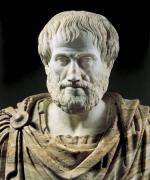
Aristotle (384-322 B.C.) remains the single most influential philosopher in Western history. His theories of substance and accidents, the four elements, and of elemental transformations and combinations, dominated Western matter theory, alchemy, and early chemistry for some 2,000 years. Although neither the theories themselves nor their specific details are accepted today, the issues he framed and questions he posed in offering them remain vital to both modern philosophical and scientific thought. Because of the extraordinary richness and complexity of his ideas, many points of interpretation remain controversial, and in recent years new explanations have challenged traditional views, significantly revising how Aristotle is being read and understood.
Background
Like other philosophers before and after him, Aristotle's primary concern was to explain the fundamental principles of being, existence, and physical reality. His main...
|
This section contains 2,378 words (approx. 8 pages at 300 words per page) |
|



