 Print
Print Word
Word PDF
PDF|
This section contains 3,193 words (approx. 11 pages at 300 words per page) |

|
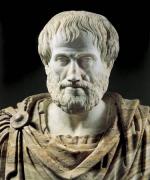
ARISTOTLE (384–322 BCE), along with Plato, was the greatest philosopher of antiquity. His influence on Western philosophical and scientific culture has been enormous, and even in the twenty-first century in many fields of knowledge (metaphysics, logic, ethics, biology, and psychology) the name of Aristotle represents an important point of reference.
Life and Works
Aristotle was born in the city of Stagira in northern Greece and at the age of seventeen moved to Athens, where for about twenty years he attended the Academy, the school founded by Plato. There he obtained an extensive and liberal education, ranging from logic to natural philosophy, from metaphysics to astronomy. From 360 BCE onward he held regular courses and seminars within the Academy. After the death of Plato in 348 BCE, Aristotle left Athens and the Academy, traveling to Atarneus, Assus, and Mytilene and then to Pella, where he was the tutor of Alexander the Great...
|
This section contains 3,193 words (approx. 11 pages at 300 words per page) |
|