
 Print
Print Word
Word PDF
PDF|
This section contains 16,862 words (approx. 57 pages at 300 words per page) |

|
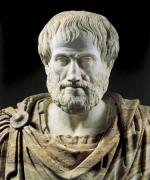
Aristotle was born in Stagira, a Greek colony in Macedonia. His father was physician to the Macedonian king, and the family had both a tradition of learning and connections to the Macedonian elite. At the age of seventeen Aristotle came to Athens to study in Plato's Academy (he may also have briefly studied rhetoric under Isocrates). The community of the Academy included some people who would stay for a few years to learn some philosophy before pursuing political careers in their native cities, and others for whom philosophy was an end in itself, and who might spend their entire lives in the Academy. Aristotle was one of the latter, and stayed in the Academy for twenty years, until Plato's death in 348, when Plato's nephew Speusippus succeeded him as head of the Academy, while the other most prominent Academics, Aristotle and Xenocrates, went...
|
This section contains 16,862 words (approx. 57 pages at 300 words per page) |
|



