 Print
Print Word
Word PDF
PDF|
This section contains 1,687 words (approx. 6 pages at 300 words per page) |

|
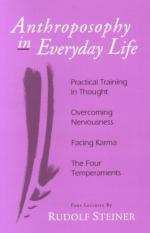
ANTHROPOSOPHY ("knowledge of the human being" or "human wisdom"), is the name that Rudolf Steiner (1861–1925), the Austrian philosopher-educator-esotericist, gave to his teachings and to the spiritual practice he recommended as an antidote to modern Western materialistic consciousness. Steiner also referred to his teaching as spiritual science, signaling what he considered to be the empirical character of his research concerning the spiritual world. As a spiritual movement, primarily Western but intended for all of humanity, anthroposophy is continuous with the Rosicrucian stream of the Christian esoteric tradition.
Early History and Teachings
In 1902 Steiner assumed the position of leader of the Berlin lodge of the Theosophical Society, but the centrality of Christ in his teachings, in contrast to the theosophical emphasis on Hindu and Buddhist spiritual teachers, made it inevitable that he eventually would feel the need to separate from that society, which he did in 1912. Steiner's followers, most of...
|
This section contains 1,687 words (approx. 6 pages at 300 words per page) |
|