 Print
Print Word
Word PDF
PDF|
This section contains 5,302 words (approx. 18 pages at 300 words per page) |

|
by Cormac McCarthy
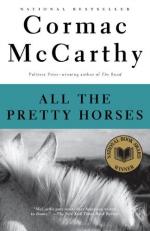
Cormac McCarthy was born in Rhode Island in 1933, lived in Tennessee, and moved to El Paso, Texas, 25 years ago. His first novel, The Orchard Keeper, was published in 1965. Through a series of books that have appeared since then, McCarthy has pursued his fascination with remote regions of the United States and Mexico, rural communities, and lone individuals who refuse the mediation of the modern world in their struggles with fate or with the forces of nature. Blood Meridian (1985) is a Gothic historical novel about outlaws and bounty hunters set in Texas and Mexico at the middle of the nineteenth century. McCarthys 1992 novel All the Pretty Horses became the first novel of his Border Trilogy, followed by The Crossing (1994) and Cities of the Plain (1998). With All the Pretty Horses, Cormac McCarthy achieved a memorable combination of adventure, psychological intensity...
|
This section contains 5,302 words (approx. 18 pages at 300 words per page) |
|