 Print
Print Word
Word PDF
PDF|
This section contains 10,044 words (approx. 34 pages at 300 words per page) |

|
Introduction
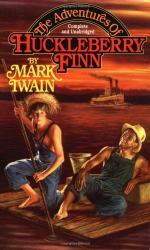
With Adventures of Huckleberry Finn (1885) Mark Twain developed an archetypal American hero. Huck Finn, the natural boy, resistant to civilization and hungry for adventure, morally right and often legally wrong, is as vivid and familiar a personality to readers as any childhood friend. The novel is a classic of American literature, and, many believe, the greatest work of a great author. Since Huckleberry Finn's publication in 1885, it has appeared in over 150 American editions alone and 200,000 copies are sold each year. Huckleberry Finn has also been translated into over 50 languages and at least 700 editions have been published worldwide. The novel has also been controversial since its publication, primarily because of its racial content, and it has been repeatedly banned by various libraries and schools.
Twain introduced the character of Huck Finn in his...
|
This section contains 10,044 words (approx. 34 pages at 300 words per page) |
|