 Print
Print Word
Word PDF
PDF|
This section contains 3,589 words (approx. 12 pages at 300 words per page) |

|
by Irene Hunt
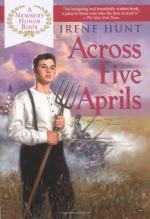
Born in 1907, Irene Hunt lived in southern Illinois for most of her life. A number of her ancestors had lived in the region during the Civil War. Her grandfather, who was nine years old when the war began, told her many vivid stories about his childhood during this period. These stories, along with old family letters and records, provided part of the inspiration for her 1964 novel, Across Five Aprils. Its plot focuses on the experiences of one southern Illinois family during the Civil War. Though the story takes place in the 1860s, there are a number of similarities between its events and those that occurred in the 1960s, when the book was written.
Events in History at the Time the Novel Takes Place
Southern Illinois and its ties to the South. In 1861 Illinois was inhabited primarily by farm families such as...
|
This section contains 3,589 words (approx. 12 pages at 300 words per page) |
|