 Print
Print Word
Word PDF
PDF|
This section contains 9,330 words (approx. 32 pages at 300 words per page) |

|
Introduction
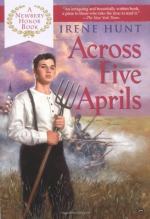
Across Five Aprils was first released in the United States in 1964, during the country's five-year-long centennial to commemorate the Civil War. This hundredth anniversary generated numerous books dealing with the conflict between the states, and Irene Hunt's first book garnered critical acclaim from the outset. The novel received a favorable review in the New York Times Book Review, earned a number of awards including the Charles W. Follet Award and the Lewis Carroll Shelf Award, and it became a Newbery Honor Book.
The novel tells the story of Jethro Creighton, a nine-year-old boy from a southern Illinois farm family who comes of age during the Civil War. The five Aprils referred to in the title are the five years during which the Civil War raged, beginning with the firing on Fort Sumter in April 1861 and...
|
This section contains 9,330 words (approx. 32 pages at 300 words per page) |
|