 Print
Print Word
Word PDF
PDF|
This section contains 5,667 words (approx. 19 pages at 300 words per page) |

|
by Friar Bartolomé de las Casas
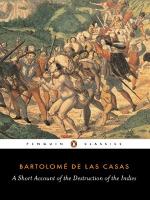
Born in Seville, Spain, in 1474, Bartolomé de las Casas was among the first wave of Spanish missionaries in the New World. From 1502 on, he lived almost continually in the New World. Although initially an owner of native slaves, he was always uneasy with the Spanish treatment of Native Americans. He experienced a spiritual turning point upon attending a sermon delivered by the Dominican friar Antonio de Montesinos, which convinced him of the injustice being wrought upon native peoples of the Americas, particularly in the Caribbean. Beginning in 1511 he raised his voice on their behalf, using his power as a Dominican friar (and eventual Bishop of Chiapas) to condemn Spanish atrocities. This effort reaches its climax in A Short Account of the Destruction of the Indies, a...
|
This section contains 5,667 words (approx. 19 pages at 300 words per page) |
|