 Print
Print Word
Word PDF
PDF|
This section contains 4,502 words (approx. 16 pages at 300 words per page) |

|
by James Joyce
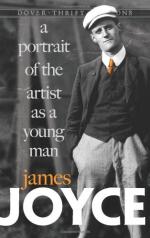
Born February 2, 1882, in a Dublin suburb, James Augustine Joyce rocked the literary world with the shocking language, attention to sometimes unsavory detail, and peculiar literary style of A Portrait of the Artist as a Young Man. Educated primarily by the Jesuits, at age sixteen the young man considered entering the priesthood but quickly realized that he would be unable to keep a vow of celibacy. Shortly thereafter, he rejected the church entirely, although it was to dominate his imagination for the rest of his life. He rebelled against his Catholic upbringing and against the domestic politics of his native land, leaving Dublin for the European continent in 1904 with Nora Barnacle, his lifelong companion and the mother of his children; they were not actually married until 1931, and then only to...
|
This section contains 4,502 words (approx. 16 pages at 300 words per page) |
|