Flappers
Flappers became the ideal for young women in the 1920s. From the clothes they wore to their attitudes, flappers were youthful, chic, and above all, modern. In the 1920s, American society rejected the Victorian attitudes of the pre–World War I(1914–18) generation. Flappers and their happy-go-lucky lifestyle set the tone for American popular culture. They partied, drank, smoked cigarettes (see entry under 1920s—Commerce in volume 2), and danced to wild jazz (see entry under 1900s—Music in volume 1) music. F. Scott Fitzgerald (1896–1940), whose writings chronicle the "Jazz Age," described flappers as "the generation that corrupted its elders and eventually over-reached itself—through lack of taste." The fun ended with the Great Depression (1929–41; see entry under 1930s—The Way We Lived in volume 2). But many of the freedoms gained by flapper women in the 1920s are taken for granted in the twenty-first century.
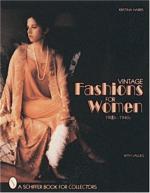
Flapper fashion was very distinctive. Women "bobbed" their hair; that is, they cut off their long hair and sported a cheek-length haircut called a bob. Flappers wore simple, straight dresses with knee-length skirts, and they used brightly colored
lipstick (see entry under 1920s—Fashion in volume 2). Unlike the generation before, flappers rejected the stable, careful life of a wife and mother. Celebrities from starlet
Clara Bow (1905–1965; see entry under 1920s—Film and Theater in volume 2) to writer Dorothy Parker (1893–1967) adopted the fashions and the reckless attitude of the flapper. Flappers shortened their skirts and became more honestly sexual than women had ever been before. The wildest excesses of flapperdom were available only to the very rich, but many American women adopted the clothes, and some of the liberties, of the flapper ideal. They flattened their chests with cloth bindings to make themselves look young and innocent. (Flappers have even been blamed for the popularity of skinny models in the late twentieth century.)
Flapper fashions of the 1920s. UPI/Corbis-Bettmann. Reproduced by permission.
For all their sense of adventure and freedom, flappers were not seeking equality with men. In fact, the fashion for short skirts and girlish innocence were actually a way of attracting men. Most flappers were married with children, just like their mothers before them, by the 1930s. What did change was women's freedom to go out and enjoy themselves alongside men. After the 1920s, it became much more common for single women to enjoy drinking, dancing, and even active sex lives. Within a couple of decades, the freedom to play would grow into the freedom for women to work alongside men as well.
For More Information
Blackman, Cally. The '20s and '30s: Flappers and Vamps (20th Century Fashion). Milwaukee: Gareth Stephens, 2000.
Fitzgerald, F. Scott. The Stories of F. Scott Fitzgerald: Volume 2: "The Crack-Up" with Other Bits and Pieces. Harmondsworth, England: Penguin, 1990.
This complete 1920s: Fashion contains 453 words. This
article contains 1,290 words (approx. 4 pages at 300
words per page).