
Summary:
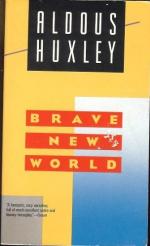
Both the novel Brave New World and the movie "Blade Runner" provide examinations of the themes of human beings' relationship with nature. Both utilize imagery to inspect this relationship and the human's desire to control, change, and take advantage of nature.
Any text is shaped by its context and there are values that grow out of that context in the text. 'Brave New World' (BNW) and 'Blade Runner-the Directors Cut' (BR) both Huxley and Scott look at the themes of mans relationship with nature and the definition of natural man. These themes have come from standards the context of 1920s and 1970s of social values and environmental issues. The creators of these texts use cinematic technique of imagery and literary technique of imagery to inspect mans relationship with nature and man's desire to control, change and take advantage of nature.
In the wild can have several meanings such as the actual nature, the environment of plants and animals, the earth. In the wild can also have the meaning of humanity where human nature is considered part of nature, yet humanity can lose its connection with the natural rhythm of nature.
Humanity in nature can be eliminated to achieve stability. Stability is deemed more vital than nature's humanity as it does not sustain the economy in both texts. In Brave New World the values grow out of the context. The context of world war one was seen as an extreme slaughter of human lives with millions of men dying. From this war stopped being adventurous, instead became horrific as over 4years over fourteen million men died. Thus this created fear among society which spanned the movement of pacifism and peace. This context is shown in BNW where it had nine years war which resulted of the BNW becoming a society of no war, as all stimulates of war are wiped out. Since society fought over "God, their country, greed, families, love, hatred and jealousy" they are all eliminated. BNW was traumatized from the war and chose "stability" over humanity as the Controller explains to the savage that "God isn't compatible with machinery, scientific medicine and universal happiness...our civilization chose machinery and happiness." In Blade runner this is also the case where the contest of 1970s of cold war and Vietnam war where replicants are made to work unconditionally for humans to ensure a reliable pool of labour and thus ensuring stability of the economy.
Nature can overcome man and his artificial world as it is stronger. Yet if human nature cannot be eliminated then it is repressed as shown in the texts. For example BNW's feelings are repressed by conditioning like "hypnopaedia." Seeing that the whole society runs on the concept of "stability", the controller uses a metaphor to explain the problem of the old world as "water under pressure... pierce it once what a jet! Mother, monogamy, romance. The urge has but a single outlet, feeling strongly...how can they be stable." Yet BNW is run on less focused feelings in order to create stability "pierce it twenty times. There were twenty piddling little fountains" since there are more outlets for feelings in BNW then society feels less strongly. Thus nature of humanity, passions is eliminated, and humanity is altered in the quest to achieve stability and no war. Reflecting contextual influences of 1920s that craved a stable, no war world. More so in BR emotions of the replicants are repressed as they are created without emotions in order to have slaves that abide obediently to their masters and to ensure that replicants do not develop emotions they are given only four years life span. Yet replicants such as Rachel do display feelings as she cries when she finds that her childhood was fake, and drops the photo of her mum, symbolically rejecting her past. This is reflection of the 1970s contextual fear that machine would become "more human than human."
Technology in BNW was beginning to play God hence technology was taking over the humans in the society. Man has become not satisfied with nature and in his arrogance for technology created the artificial man and has made himself god. This shows the context of the 1920s and 1970s where there was fear that technology would take over human abilities and play God. This is what Huxley feared would happen in the future and warned against the continuation of reliance on technology due to the genius of one man. He uses the symbolism of god portrayed as ford as a parody of Henry ford's car making assembly line taking over the world, and had that assembly line as the system of artificial baby making "bokanovsky process." Similarly Tyrell the genius of BR symbolically becomes god to the replicants. There are many religious and philosophical parallels in both texts. The film reflects Christian concern of the 1970s, which views nature and human nature as essentially 'fallen' from god, and that science was replacing God. Before society would turn to God for help and a cure if they were sick, yet now they turned to science to look for a cure instead. In BR man has also become dissatisfied with nature and seeing nature as not good enough creates unnatural man, the replicant to be "more human then human." Ironically Tyrell is depicted as God as he created all the replicates. Tyrell upon seeing Roy, portrayed as the prodigal son, states "Its difficult to face your maker" hence claiming he was god. Roy symbolically gives "God" the "kiss of Judith before he portrays him. The sound technique of crunching bones and wild screams leaves the audience imagining the gruesome death of our God, portrayed by Tyrell.
.
There was a deep environmental concern that man's relationship with nature was destructive, as man believed that nature is not efficient enough. There was a great concern during the 1970s that man was polluting the environment to such an extent that there may not be any nature left in the future. Man's relationship with nature in both texts was destructive. This sparked the 1970s space race to find an off world planet once earth was all brunt up. This fear of the 70s was shown in BR where Scott uses 'film noir' to predict a feared future where the environment is so damaged that the its dark, grim and polluted with acid rain, black skys, filled with garbage, similar to a polluted hell.
Nature is destroyed to such that only artificial animals exist, and every capable human has abandoned earth to find a better world. This rarity of nature is shown by Zhora when asked if her snake was real comments "would I be working here if it was real"" With significance placed in lighting and camera angles, Scott is able to parallel to the story line to camera positioning, filtered by light slicing through abandoned warehouses to present the relationship between nature and humanity. Artificial neon lights have replaced natural sunlight and this pollution domination by technology can hardly be considered 'natural' - as humanity has exploited the natural environment. The physical environment of the BNW contrasts to the setting of Los Angeles 2019 presented in BR. In BNW nature is deemed meaningless. Even the "incessant buzzing of helicopters filled the twilight" has more life then the living human who are seemingly dead have "hands with pale corpse color goose flesh." In fact nature/humanity has been utterly removed from the natural world and its rhythms in that viviparous birth, family relationships, and death either do not exist or is seen as useless. The controller claims "the old world was full of fathers-therefore full of misery; full of brothers..full of madness and suicide." Nature is not seen as sufficient enough in BNW and man has even altered the natural birth of "one egg, one embryo, one adult" to become "scores, scores" by the "bokanovsky process" with "one egg, one embryo, ninety-six adults." However in the process of altering humans (nature) humans are degraded to be less human "embryos like photograph film"
In Brave new world and Blade runner both texts have values that emerge from the context. In BNW it is a prediction of the possibilities whereas in BR it's a warning of what may take place. In BR the text questions the meaning of humanity, while in BNW it shows the future if such behavior of the 1920s continues.
This is the complete article, containing 1,349 words
(approx. 4 pages at 300 words per page).

