| Name: |
Robert Owen |
| Birth Date: |
|
| Death Date: |
|
| Place of Birth: |
|
| Place of Death: |
|
| Nationality: |
|
| Gender: |
|
| Occupations: |
|
Robert Owen is considered one of the original socialists. His ideas about cooperation and workers' rights laid the foundation for socialist principles and trade unions and influenced thinkers such as Karl Marx and Frederick Engels.
Owen was born May 14, 1771 in Newton, Wales as the sixth of seven children. Beginning at age seven, he educated himself and left home at ten to apprentice with a draper. In 1785, Owen arrived in Manchester, England, which was in the throes of industrial development. At this point, Owen made his way into business, applying his savings and his textile knowledge to start his own factory. At age twenty, Owen managed a textile mill of five hundred workers and was eventually made a partner.
Soon after, Owen met Anne Caroline Dale, whose father owned the mill in New Lanark, Scotland. Owen and Anne married and Owen and his partners were able to purchase the mill, which employed one thousand workers. Owen and Anne moved to New Lanark in 1800, at which time Owen began to put his theories about human character into practice.
Owen's main premise was that humans are not inherently good or bad but are shaped by their environment and heritage. It would, therefore, follow that, in the right environment, anyone would develop a good character and moral values. Owen's contemporaries believed that the poor were lazy and ignorant and that they always would be. Owen believed, however, that the poor were poor because they were unemployed and uneducated--that better housing, food, and clothing would improve the character of the poor. It was this idea that he put into practice at the New Lanark mill.
Owen's changes included reducing workers' hours, improving company housing, and improving sanitary conditions. He often met with difficulties from his partners but in 1813 entered into a satisfactory partnership with a few benevolent Quakers and the Utilitarian Jeremy Bentham. These partners did not hold all Owen's views but agreed that conditions should be improved and allowed Owen to focus on the children employed by the mill. He believed that schooling was necessary not to teach facts and figures but to develop children's character so that they would become well-adjusted adults. He set up a school for children that included play, music, and affection rather than abuse. He also prohibited anyone under ten from working and reduced hours for workers under 18. In 1816, he established the Institution for the Formation of Character, which was used as a school during the day and an adult education and community center at night.
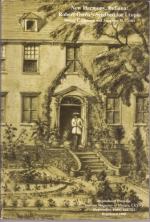
New Lanark was soon well known throughout Europe as a model community and enjoyed many visitors. Owen hoped to see his success duplicated across England and campaigned for a bill in 1815 that regulated the employment of children in the textile industry. His bill, however, found no supporters. Well respected for his work at New Lanark, he was invited to write a proposal to a government committee that addressed manufacturing issues. This Report to the Committee for the Relief of the Manufacturing Poor (1817) laid out Owen's plan to place the unemployed into self-sufficient cooperative villages rather than give them government hand-outs. Like the bill regarding child labor, this report did not persuade the committee. Owen continued to develop his plan, realizing that self-government and equality would be necessary for a cooperative settlement to succeed. He took these ideas to the United States in 1824, where he was invited to lecture on his model for self-sufficient cooperative communities. While there, he found a dissatisfied community of Rappites in Harmony, Indiana and purchased the land and village. On May 1, 1825, eight hundred people had arrived to join his model society and New Harmony was established. In less than a year, quarrels among its members and break-away communities led to the failure of the community.
In England, however, the working class was gaining ground. Trade unions were legalized in 1824, and laborers became leaders in their own movement. Workers adopted Owen's ideas as an agenda, forming trade communities and artisan societies. These societies empowered workers and gave them a sense of value. Owen's opinion that labor is a source of wealth and that workers have certain rights greatly contributed to the labor movement and the development of a new working class. Owen did not, however understand or promote class struggle, feeling that a transformation to a cooperative, egalitarian society would be peaceful and natural.
Frederick Engels developed Owen's ideas of cooperation and socialism into a new civilization based on industry and workers. He agreed that workers could master their existence and need not toil as slaves. Owen also criticized religion and marriage, feeling that these institutions had been forced on mankind to keep them ignorant and enslaved. Engels and Karl Marx agreed that religion would have no place in the new society. They saw the move towards a cooperative society as a natural progression from capitalism; however, they believed a revolution was necessary. Robert Owen gave workers confidence and presented ideas for a socialist government. Great thinkers of his time and since were influenced by his ideas, and many of them have been put into practice.
This is the complete article, containing 852 words
(approx. 3 pages at 300 words per page).
View More Summaries on Robert Owen