The Jungle is a novel by Upton Sinclair. In this novel, Jurgis, the head of an immigrant family, discovers that life is not as easy in Chicago's stockyards as he thought it might be. Jurgis struggles through poverty and tragedy, ultimately finding a kind of acceptance that comes with knowing you can lose everything at the drop of a hat.
Sinclair Publishes the Jungle
United States 1906
Synopsis
Upton Sinclair published The Jungle in 1906 as a socialist argument against wage slavery. Instead of generating interest in socialism, his exp...
Read more
The Jungle
by Upton Sinclair
Upton Beall Sinclair Jr. was born in Baltimore, Maryland, in 1878. The stark contrast between his ancestry, made up of distinguished military officers and aristocrats, ...
Read more
Chapter 1
It was four o’clock when the ceremony was over
and the carriages began to arrive. There had
been a crowd following all the way, owing to the exuberance
of Marija Berczynskas.&nbs...
Read more
Upton Beale Sinclair, Jr. (1878-1968), American novelist and political writer, was one of the most influential muckraking writers of the 1900s. He continued to write and speak for reform for many year...
Read more
Biography EssayUpton Sinclair was a writer whose main concerns were politics and economics. His ideas about literature—his own, written over more than six decades, and that of others—were ...
Read more
Upton Sinclair was a writer whose main concerns were politics and economics. His ideas about literature--his own, written over more than six decades, and that of others--were inseparable from his drea...
Read more
The Jungle, by Upton Sinclair, is a novel about the injustices cast upon an innocent and honest workingman, Jurgis Rudkus, and his family. Through Rudkus' experiences, the reader is escorted through a...
Read more
The Jungle by Upton Sinclair is loaded with symbolism. The title itself is symbolic. The other things that are symbolic are Packing town and the cans with rotten meat in them.
The title is the mo...
Read more
"He gets by on you/ And the space he invades/ He gets by on you/ ... Mean, mean pride," is from Rush's song Tom Sawyer. This belief is the main philosophy portrayed throughout Upton Sinclair's The ...
Read more
The novel "The Jungle", is a hybrid of history, literature, and propaganda. It was written in 1906 by Upton Sinclair, to demonstrate the control big business had over the average working man, and his...
Read more
Alex Morgia English 11 A
April 27, 2003 "The Jungle"
The novel "The Jungle", is a hybrid of history, literature, and propaganda. It was written in 1906 by Upton Sinclair, to demonstrate ...
Read more
"The Jungle" by Upton Sinclair is about a Lithuanian family who immigrates to America with the dream of wealth, freedom, and opportunity. Jurgis Rudkus, Ona, his soon to be wife, Marija, Jonas and the...
Read more
Industry in America during the 1900's was in the "I'm walking, what next"", stages of infancy. Politics, although not so young, was dealing with the bourgeoning growth of industry. Regulation in Amer...
Read more
Despite horrid conditions of early American metropolis living, inhabitants of these places did posses some positive characteristics. In The Promised Land Mary Antin goes to great lengths to explain th...
Read more
During the early 1900s, big cities like Chicago and New York were blooming with new ways of making money, more job opportunities, and filling people's heads with ideas of a better life. This transfo...
Read more
"The Jungle" by Upton Sinclair is a book with very discriptive information about life for most americans in the early 1900's. it is about a family that moves from lithuwania to america to try to have...
Read more
This book was written about the meat industry and immigrants at the turn of the century, it was published in 1905 and created some controversy. It contributed to the passing of the Pure Food and Drug ...
Read more
The Jungle is a book written in the first part of the twentieth century depicting the hard ships and perils of factory life in Chicago. The main character of the story is Jurgis Rudkus a Lithuanian...
Read more
What was the American Dream? Was it simply just an ideal of millions of hopeful immigrants that a place will magically solve all their problems? It's hard to imagine packing up all of your belongings ...
Read more
Before I even had this book in my grips I wasn't excited about reading it. My sister had read it awhile back and never seemed to be able to get through it. She would always complain about having to r...
Read more
Our lives are guided along by the government. The government is there to help the needs to everyday people by coming up with ways to further better our lives using bills, laws. Etc. But 100 years ago,...
Read more
The dream of the American immigrant was simple: America, the great land of capitalism, with its plentiful opportunities, would provide them with a good job and a home to raise their family in. The wor...
Read more
1. What does Jurgis come to understand about power"
In the book Jurgis comes to understand that power lies in groups. He learns that in America power lies within the people and that if enough people ...
Read more
The Jungle undulates with tumultuous waves of love. They are choppy, always gray and sharp. Sinclair presents a love story, bittersweet and almighty, showing the immense magnitude of love's power an...
Read more
Upton Sinclair was the most prolific writer in the history of America. He did most of his work focusing on how the politicians are corrupting the United States and how it will be made a better place; ...
Read more
Throughout the course of history for mankind, society has always embodied a collection of people called the working class. Although considered by many as the very backbone of society, poor treatments...
Read more
The Jungle
As the industries in America grew, so did its population. Immigrants came from across the world with one common dream in mind that capitalist America, with its plentiful opportunities, wou...
Read more
Upton Sinclair's ultimate goal was not only to speak for "the workingmen of America," the people he dedicated The Jungle to, but it was to question the people of the country of their capitalist syste...
Read more
The Jungle: a negative uptopia
"There is one kind of prison where the man is behind bars, and everything that he desires is outside; and there is another kind where the things are behind th...
Read more
In the book The Jungle by Upton Sinclair; this was first published by Fine Creative Media Inc. in 1906 (edition I read was published in 2003) it discuses life as an immigrant and how immigrants foresa...
Read more
The Jungle Book Notes is a free study guide on The Jungle by Upton Sinclair. Browse the summary below:
Author Biography / Context of the Work
One-Page Plot Summary
Character...
Read more



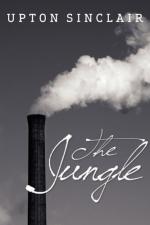
 Sinclair Publishes the Jungle
 The Jungle
 The Jungle
 Upton Beale Sinclair, Jr.
 Upton (Beall) Sinclair


 The Jungle