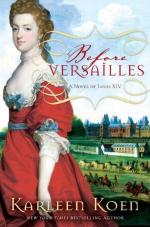
Louis XIV (1638-1715) was king of France from 1643 to 1715. He brought the French monarchy to its peak of absolute power and made France the dominant power in Europe. His reign is also associated with...
Read more
In the excerpt that follows, Barras describes the opposition of the Roman Catholic Church to seventeenth-century theatre.
Led by [Jacques-Bénigne] Bossuet the Church presented, officially at...
Read more
In the following excerpt, Jourdain discusses the development of comedy by Molière's successors.
It would have been difficult for any successors of Molière to avoid the dangerou...
Read more
An English historian and critic, Dobrée distinguished himself both as a leading authority on Restoration drama and as a biographer who sought, through vivid depiction and style, to establish bi...
Read more
In the following excerpt, Phillips examines the debate between the religious moralists and the dramatic theorists concerning the morality of seventeenth-century comic drama.
Against the religious m...
Read more
In the essay that follows, Caldicott examines several common "burlesque" features of seventeenth-century comedy.
It is, of course, quite paradoxical that the term 'baroque...
Read more
In the following excerpt, Lancaster explains the decline of French tragicomedy in the late seventeenth century.
Toward 1650, … the number of tragi-comedies that appeared each year was decrea...
Read more
In the following excerpt, Herrick examines several tragicomedies by mid-seventeenth-century dramatists Pierre Du Ryer and Jean de Rotrou.
[Pierre Du Ryer's] best tragedy, and the most famous...
Read more
In the following excerpt, Gethner discusses the use of moral and religious conventions in seventeenth-century tragicomedy.
The seventeenth century, called the golden age of French drama, was not co...
Read more
In the following excerpt, Gethner contends that a political dimension is typically present in seventeenth-century French tragicomedies and is often closely related to other elements of the plot.
Th...
Read more
In the following excerpt, Lough discusses the changing social status of the theatre during the seventeenth century and the composition of theatre audiences, observing that the middle classes were stro...
Read more
In the essay that follows, Forsyth describes the principles of classical doctrine and how these rules were upheld by seventeenth-century French dramatists.
There is a common belief in English-speak...
Read more
In the following excerpt, Lowenthal discusses the writings of three French dramatists within the context of the emergence of the middle class during the seventeenth century.
…In Cervantes a...
Read more
In the essay that follows, Baudin discusses the depiction of popular sentiment in seventeenth century French tragedy in relation to the changing political atmosphere of the time.
[Cardinal] Richeli...
Read more
In the following excerpt, Lancaster provides an analysis of the works of two women who were among the most prominent female French tragedians of the late seventeenth and early eighteenth centuries.
...
Read more
In the following excerpt, Lockert discusses the weaknesses of several critics' assessments of French neo-classical tragedies and argues that greater consideration should be given to the works o...
Read more
In the following excerpt, Daniel analyzes the treatment of history and the use of classical form in historical tragedies, arguing that while French history offered the potential for theatrical exploit...
Read more
Brereton is an English scholar who has written extensively on French literature of the sixteenth, seventeenth, and eighteenth centuries. In the following excerpt, Brereton analyzes the lack of develop...
Read more
"I am the state." King Louis XIV was a strong and extravagant ruler who knew what had to be done to create political stability and strength in France. His abilities to manipulate the bourgeoisie and t...
Read more
France was an absoulte monarchy ruled by Louis the XIV that was assisted by Colbert. It was an absolutist state, meaning that the authority of France was only the King's and no one else's. Colbert...
Read more
Louis XIV was born in 1638. In the year 1661 he succeeded the regent Cardinal Mazarin. At the time he was only twenty-three. Louis applied the symbol of the sun to his reign; "the light that impar...
Read more
Most know Louis XIV for his extravagant spending and lavish palaces but Louis XIV will always be remembered as one the greatest rulers of France. He is the model that future rulers looked to for examp...
Read more
In history, there have been many men who have done remarkable things and have been a cause to an important event, and therefore the idea of a great men does exist. The men might have been in the rig...
Read more
The fact itself that courtiers of Louis XIV were required to show deference and respect to him enhanced his position as Absolute Monarch. However there are many other ways in which the life of the cou...
Read more

PARIS, Feb 2 (Reuters) - French President Nicolas Sarkozy
married supermodel-turned-singer Carla Bruni at the Elysee
Palace on Saturday, just three months after they started dating. "Ms Carla Brun...
Read more