New Machine Tools Are a Catalyst for the Industrial Revolution
Overview
Machine tools were the instruments of industrialization. They enabled the first capitalists to mass-produce inexpensive, quality...
Read more
Key Inventions in the Textile Industry Help Usher in the Industrial Revolution
Overview
While there is some debate over exactly when the Industrial Revolution's opening salvos were fired, there...
Read more
Industrial Revolution
The concept of an industrial revolution denotes an economic transition in which the means of production become increasingly specialized, mechanized, and organized. This process u...
Read more
Industrialism Takes Root in the United States
At the time of the American Revolution (1775–83; the American colonists' fight for independence from England) the earliest elements of anoth...
Read more
The Machine Makers
A period of rapid advances in technology started soon after the United States gained its independence in 1783 and continued through the mid-nineteenth century. It was driven by a re...
Read more
Workers in the Industrial Age
During the last three decades of the nineteenth century, the majority of Americans became wage earners, people who worked for someone other than themselves. This was a fi...
Read more
The Effects of Industrialism on Farming and Ranching in the West
Industrialization took on a variety of forms throughout the United States in the second half of the nineteenth century. While factories...
Read more
Industrialism in the Twentieth Century
The scale of industrial enterprises in the United States increased during the early years of the twentieth century, making the American workplace very different ...
Read more
During the late 1890s, three men revolutionized Big Business in America. Three men almost single handedly industrialized the business world in the United States. And finally three men, though unaware...
Read more
During the latter half of the nineteenth century, Europe experienced a sudden growth in industry and commercial innovations that forever changed they ways of business and living. These transitions ...
Read more
Before the Industrial Revolution, ninety five percent of the population had just enough of the bare necessities to get by, while the aristocracy could live what modernists would consider a decent life...
Read more
The Industrial Revolution
The Industrial Revolution had a profound effect on all levels of society in the late 18th and early 19th centuries. How people live...
Read more
Throughout history, a number of small inventions were constructed in order to make life easier. Yet, in 1750, after the Civil War, a new time period known as the Industrial Revolution began bringing...
Read more
The Industrial Revolution was a time of remarkable changes, from hand tools and handmade items, to products which were mass produced by machines. Workers became more productive and more items were man...
Read more
The Industrial Revolution began during the 18th century in England. There were many economic, political and social factors leading to the Industrial Revolution.
One of the economic factors was the...
Read more
In a certain period in history, innovations and technology grew in such a rapid pace to have become known as the Industrial Revolution. The Industrial Revolution was an era of climactic change; the wo...
Read more
Gilded Age referred to the period after Civil War where there was close balance between the two political parties. It's name was given by Mark Twain, and it also referred to the golden guilds the ric...
Read more
This report is about why businesses grew from 1750 to 1900. In it I will explain the factors which made the undersized businesses from the 1700s to modern day global businesses.
Firstly, we need to...
Read more
Between 1750 and 1900, there was a period of rapid change and growth in Britain. So much so that some historians have labeled the era the "Industrial Revolution." There were changes in all sorts of ar...
Read more
The Industrial Revolution can be seen as advancement for some and a time of great difficulty for many. Improvement and protection for laborers held a big part in demands directed towards the governmen...
Read more
The Industrial Revolution was one of the most important time periods in history. It changed the way people lived back the 1800's, and shaped the way people would live in the future. Overall, the Indus...
Read more
The Industrial Revolution had what were probably the largest effects ever witnessed in the history of the human race, with the possible exception of the Renaissance. The Industrial Revolution marked o...
Read more
As industrial giants such as John D. Rockefeller and Andrew Carnegie began to change traditional management and business practices nationwide, their efforts inadvertently altered the face of society. ...
Read more
The industrial revolution and other major changes in technology and religious and political views caused significant changes in the environment and gender roles, in the nations of Britain and China du...
Read more
Britain had large supplies of coal & iron. Iron, used for machines and steam engines, used coal for fuel. Abraham Darby found that coal damaged the iron. He produced cheap, better iron. His grandson ...
Read more
The Industrial Revolution was a time of great change for England. Age-old standards and ways of life were remade and reformed. All too often power and money lust drove the new leaders of the Industria...
Read more
`Ornamentation,' says Ruskin, `is the principal part of architecture.' It is that part, he says in another place, which impresses on a building `certain characters venerable or beautiful, but otherwis...
Read more
Of all the countless factors that attributed to the unparallel success of the industrial revolution in England, there were a select few that really played roles front and center of everything. Deb...
Read more
Response to the Industrial Revolution: cities
Changes in living and working conditions have led to disease spreading more rapidly. Towns have grown very quickly as factories lead to migrations from t...
Read more
The Industrial Revolution had a more positive effect on Western society in the 19th century. Although child labor during the 1820's was quite hard on most of the children working and also proved t...
Read more
Industrial Revolution
What is the Industrial Revoultion? The Industrial Revolution is when
Europe transformed from a rural, agricultural society to an urban, industrial society.
The Industrial...
Read more
Even though the Industrial Revolution was a time of technological progress, this mechanization came at the expense of man. England's overall economy did improve, but not all people benefited from its ...
Read more
One explanation for businessmen's success during the industrial revolution was the new opportunities for wealth introduced through peoples changing interests. For example, rather than drink alcohol, ...
Read more
From the hunting and gathering of the Stone Age to the agriculture and animal domestication of the pre-18th century and finally to the profound industrial and social reform of the 19th century, Europe...
Read more
The Industrial Revolution affected the entire world. It revolutionized how people lived and how people worked. It made way for new jobs, and also closed certain occupations. The Industrial Revolutio...
Read more
Throughout history, there have always been political, economical, social and cultural revolutions. These developments have had complex and long lasting impacts on people's lives; one revolution that ...
Read more
In the late 1700's, the Industrial Revolution began. The Industrial Revolution had a wide range of positive and negative effects on the social and economic lives of the people of England. Not only fa...
Read more
The clang of the machinery fills the space of the entire room, clogged with dust from the cotton and unbearably hot from the heat used to keep the machines working optimally. Workers toil inside, labo...
Read more
The Industrial Revolution has changed our society, creating large cities and the need for public services. Interdependence in economic life made workers increasingly reliant on the will of their emp...
Read more
Industrialization in Russia and Japan
The Industrial Revolution may be defined as the application of power-driven
machinery to manufacturing. It had its beginning in remote times, and is still cont...
Read more
The Industrial Revolution was the result of dramatic social and economic changes. These changes caused Britain to become a modern industrial society instead of an agricultural and commercial society. ...
Read more
The Industrial Revolution has aided society as a whole since it started in the eighteenth century. Railroads and telegraphs were developed, decreasing travel time for people to travel cross-country as...
Read more



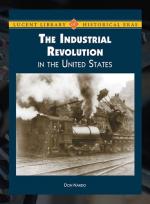
 New Machine Tools Are a Catalyst for the Industrial Revolution
 Industrial Revolution
 Industrialism Takes Root in the United States

