
 Print
Print Word
Word PDF
PDF|
This section contains 571 words (approx. 2 pages at 300 words per page) |

|
An Analysis of Chinese Culture through Wild Swans
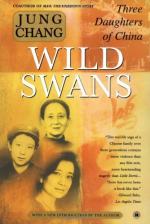
Summary: This is an analysis of China's changing society, government, and people during the twentieth century from information gained from the novel Wild Swans by Jung Chang. Covering a period of sixty-one years, the story offers a factual account of these societal changes through the eyes of Chang's grandmother, her mother, and herself.
An ancient Chinese proverb says "No matter how capable, a woman cannot make a meal without food." During the Great Leap Forward campaign of Mao in 1958, the reversal of this pragmatic saying becomes the basis of Chinese rule, "Capable women can make a meal without food." During the end of WWII, China experiences a great upheaval in leadership as China shifts from ancient imperial rule and Japanese occupation to a new form of government known as communism. The author of Wild Swans, Jung Chang, tells a factual account of China's changing society through the eyes of her grandmother, mother, and herself. This story spans a period of sixty-one years in which the ancient traditions of feet binding and kowtowing of 20-century China dissipates into modern China.
Ancient China's history is plagued by constant warfare and corruption. Throughout its long standing, the lands of China are passed from landlords...
|
This section contains 571 words (approx. 2 pages at 300 words per page) |
|



