
 Print
Print Word
Word PDF
PDF|
This section contains 3,516 words (approx. 12 pages at 300 words per page) |

|
SOURCE: Menchú, Rigoberta, and Mary Jo McConahay. “Interview with Rigoberta Menchú.” Progressive (January 1993): 28–31.
In the following interview, Menchú discusses her role in international politics and her opinions on the Guatemalan civil war.
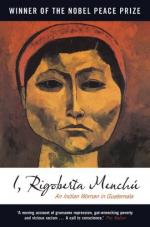
Rigoberta Menchú received the Nobel Peace Prize in December, at age thirty-three, for promoting the rights of indigenous peoples. A Quiché Maya Indian from Chimel, Guatemala, she grew up watching her people brutalized by the Guatemalan military during that country's civil war, the longest-running leftist insurgency in the Americas. In her 1983 book, I, Rigoberta Menchú, she describes her life in poverty, her work as a catechist, and her growing understanding of injustice and resistance as she watched family members die: her sixteen-year-old brother flayed and executed with other suspected “subversives” in the plaza of a small town, her mother raped and tortured for days by soldiers, her Catholic activist father immolated with other protesting campesinos while...
|
This section contains 3,516 words (approx. 12 pages at 300 words per page) |
|



