
 Print
Print Word
Word PDF
PDF|
This section contains 5,207 words (approx. 18 pages at 300 words per page) |

|
SOURCE: "Failures of Transformation in Sobac̆'e serdce" in Slavic and East-European Journal, Vol. 33, No. 3, Fall, 1989, pp. 386-99.
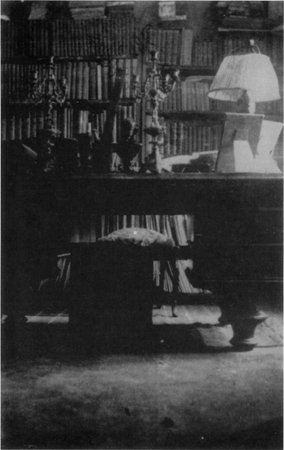 Bulgakov's study.
 In the following essay, Fusso analyzes the scope of political allegory in The Heart of a Dog (Sobac̆'e serdcej, concluding that the allegorical level extends beyond "the level of social and political themes, which lie relatively close to the surface..., [to the level of language, where Bulgakov's critique of radical transformation finds perhaps its deepest expression. "]
Bulgakov's Sobac̆'e serdce is the tale of a transformation: a meddling professor turns a perfectly nice dog into an obnoxious man. As recently as 1984, in Ellendea Proffer's biography of Bulgakov [entitled Bulgakov: Life and Work, 1984], the story has been read as an allegory of the revolutionary transformation of Russian society, a cautionary tale about the dangers of tampering with nature. Other readers have been understandably dissatisfied with the schematicism of...
|
This section contains 5,207 words (approx. 18 pages at 300 words per page) |
|



