
Forgot your password?  

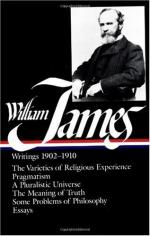
Writings, 1902-1910 Quiz

This Study Guide consists of approximately 41 pages of chapter summaries, quotes, character analysis, themes, and more - everything you need to sharpen your knowledge of Writings, 1902-1910.

Writings, 1902-1910 Quiz

Students: Take our free Writings, 1902-1910 quiz below, with 25 multiple choice questions that help you test your knowledge. Determine which chapters, themes and styles you already know and what you need to study for your upcoming essay, midterm, or final exam. Take the free quiz now!

Teachers: The BookRags Lesson Plan contains hundreds of test and quiz questions, including multiple choice, short answer, and essay questions. Create your own quiz or test with our automatic test generator, or choose from our ready-to-go chapter quizzes, midterm tests, and final exams. Don’t waste time reinventing the wheel, get the Lesson Plan today!

Directions: Click on the correct answer.

1)

Who wrote the poem "To You"? (from Pragmatism Section II (Lectures V-VIII))

Henry David Thoreau.
Henry James.
William Shakespeare.
Walt Whitman.
2)

In the story about the earthquake, James focuses on what part of the experience? (from Essays Section II (Essays 11-20))

Enhanced sensory images.
Concrete character.
Simplistic setting.
Credible psychological involvement.
3)

What does James attribute to using parts to explain wholes? (from A Pluralistic Universe Section I (Lectures I-IV))

Empiricism.
Rationalism.
Monism.
Pragmatism.
4)

The third lens James describes that is used for seeing the world is which of the following? (from Pragmatism Section II (Lectures V-VIII))

Aestheticism.
Ascetism.
Pragmatism.
Meliorism.
5)

What is the concept called where one believes that everything has an opposite that is negated? (from A Pluralistic Universe Section I (Lectures I-IV))

Rationalist.
Deductive.
Dialectic.
Inductive.
6)

James says that the field of consciousness is a center fringed by which of the following? (from A Pluralistic Universe Section II (Lectures V-Appendix C))

Ignorance.
Awareness.
Attention.
Intelligence.
7)

Where did James experience an earthquake? (from Essays Section II (Essays 11-20))

Arizona.
Oregon.
Nevada.
California.
8)

What does James describe as being a sudden and great extension of the field of consciousness? (from Essays Section II (Essays 11-20))

Psychological states.
Biological states.
Mystical states.
Enahnces states.
9)

Who says that concepts freeze movement? (from A Pluralistic Universe Section II (Lectures V-Appendix C))

Royce.
James.
Hegel.
Bergson.
10)

What does James attribute to using wholes to explain parts? (from A Pluralistic Universe Section I (Lectures I-IV))

Logic.
Empiricism.
Rationalism.
Pluralism.
11)

Who does James focus on in Chapter II? (from Some Problems of Philosophy Section I (Chapters I-VII))

Aristotle.
Plato.
Descartes.
Kant.
12)

'Each-form,' according to James, allows for intimacy with which of the following? (from A Pluralistic Universe Section II (Lectures V-Appendix C))

Divine.
Intelligence.
Love.
Emotion.
13)

What does James describe as occurring when the whole changes all things contained within it must also change as a singular act? (from A Pluralistic Universe Section I (Lectures I-IV))

Inductive reasoning.
Immanent operation.
Logical operation.
Singular operation.
14)

Chapter XII describes the relationship between novelty and what other quality? (from Some Problems of Philosophy Section II (Chapters VIII-Appendix))

Causation.
Philosophy.
Ignorance.
Happiness.
15)

What is the view that salvation of the world is not possible? (from Pragmatism Section II (Lectures V-VIII))

Ascetism.
Meliorism.
Optimism.
Pessimism.
16)

James claims that the belief in absolute negates the need for which of the following? (from The Meaning of Truth Section II (Lectures VIII -XV))

Experience.
Common sense.
Faith.
Action.
17)

What does James say about motion, change, and activity? (from Some Problems of Philosophy Section II (Chapters VIII-Appendix))

They are always growing.
They are all the same.
They often stop moving forward.
They are unique to one another.
18)

What does James believe people tend to do with the truth? (from The Meaning of Truth Section I (Lectures I-VII))

Optimize it.
Neglect it.
Conserve it.
Spend it.
19)

What does "Answers to a Questionnaire" address? (from Essays Section I (Essays 1-10))

Government.
Personal beliefs.
Laws.
Theism.
20)

What fellow empiricist does James claim to sympathize with most? (from Essays Section II (Essays 11-20))

Bradley.
Bergson.
Kant.
Bode.
21)

According to James, 'each' and 'whole' are levels of what? (from A Pluralistic Universe Section II (Lectures V-Appendix C))

Ignorance.
Intelligence.
Attention.
Witness.
22)

Who does James use in Lecture X to illustrate his point clearly? (from The Meaning of Truth Section II (Lectures VIII -XV))

Julius Caesar.
Henry James.
Homer.
William Shakespeare.
23)

According to James, what is within the realm of sensory experience prior to cognition? (from A Pluralistic Universe Section II (Lectures V-Appendix C))

Empiricism.
Determinism.
Freedom.
Intelligence.
24)

Lecture XII is a response to which of the following? (from The Meaning of Truth Section II (Lectures VIII -XV))

Shakespeare's work.
Assertions of faith.
Herbert's criticism.
Connotation and denotation.
25)

The first lens James describes that is used for seeing the world is which of the following? (from Pragmatism Section II (Lectures V-VIII))

Pessimism.
Reason.
Logic.
Truth.
Copyrights
Writings, 1902-1910 from BookRags and Gale's For Students Series. ©2005-2006 Thomson Gale, a part of the Thomson Corporation. All rights reserved.
Follow Us on Facebook
Homework Help
