
 Print
Print Word
Word PDF
PDF|
This section contains 273 words (approx. 1 page at 400 words per page) |

|
Wide Sargasso Sea Summary & Study Guide Description
Wide Sargasso Sea Summary & Study Guide includes comprehensive information and analysis to help you understand the book. This study guide contains the following sections:
This detailed literature summary also contains Bibliography and a Free Quiz on Wide Sargasso Sea by Jean Rhys.
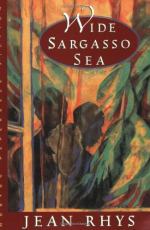
When Wide Sargasso Sea was published in 1966 it helped to rescue its author, Jean Rhys, from the obscurity into which she had fallen. Her previous novels and short stories, published between the two world wars, were out of print. Rhys, who had succumbed to an alcohol addiction, lived an isolated life in a remote village in England, a country she had always despised. Wide Sargasso Sea caught the immediate attention of critics, won the prestigious W. H. Smith Award and Heinemann Award, and earned Rhys a place in the literary canon. The unique novel seeks to recreate the true story of Bertha Mason, the Jamaican mad wife of Edward Rochester in Charlotte Bronte's Jane Eyre. In telling Bertha's story (known in Wide Sargasso Sea as Antoinette Cosway), Rhys explores the complex relations between white and black West Indians, and between the old slaveholding West Indian families and the new English settlers in the post-emancipation Caribbean. Set mainly in Jamaica and Dominica, the country of Rhys's birth, the novel describes how Antoinette became mad. In Bronte's novel, Bertha/Antoinette is a monster, described as violent, insane, and promiscuous. Rhys creates instead a sympathetic and vulnerable young woman who seeks, unsuccessfully, to belong. The themes explored in the novel, especially the status of women and the race relations between newly freed slaves and their former owners, have drawn the attention of critics. Other critics debate the merits of the novel, saying that it relies too closely on Jane Eyre and cannot stand alone. Certainly, Rhys's novel forces readers to reexamine Bronte's novel and consider the significance of race in the nineteenth-century English novel.
Read more from the Study Guide
|
This section contains 273 words (approx. 1 page at 400 words per page) |
|




