
 Print
Print Word
Word PDF
PDF|
This section contains 392 words (approx. 1 page at 400 words per page) |

|
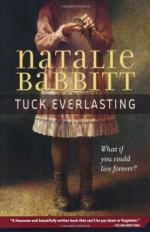
The first thing that strikes most critics about Babbitt's work is its difference from other modern children's fiction. In the 1960s and 1970s, while an increasing number of writers for children and adolescents were producing work aligned with the new realism, dealing more or less explicitly with the social and political issues of the day, Babbitt was writing a series of books like Tuck Everlasting. These gentle, oddly philosophical novels, written in an understated and slightly old-fashioned prose style, are, for the most part, set in a somewhat fantastic, almost invariably pastoral pre-twentieth century world.
Babbitt's fiction, however, also fails to fit comfortably into that other popular genre for young people: high fantasy.
Although connections can be made between Tuck Everlasting and, for example, the work of Lloyd Alexander, Alan Garner, or Ursula K. Le Guin, Tuck lacks the actively heroic note, the call to arms...
|
This section contains 392 words (approx. 1 page at 400 words per page) |
|





