
Forgot your password?  
Related Topics

The Worldly Philosophers | Quiz

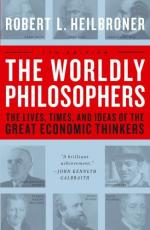
This Study Guide consists of approximately 51 pages of chapter summaries, quotes, character analysis, themes, and more - everything you need to sharpen your knowledge of The Worldly Philosophers.

The Worldly Philosophers | Quiz

Students: Take our free The Worldly Philosophers quiz below, with 25 multiple choice questions that help you test your knowledge. Determine which chapters, themes and styles you already know and what you need to study for your upcoming essay, midterm, or final exam. Take the free quiz now!

Teachers: The BookRags Lesson Plan contains hundreds of test and quiz questions, including multiple choice, short answer, and essay questions. Create your own quiz or test with our automatic test generator, or choose from our ready-to-go chapter quizzes, midterm tests, and final exams. Don’t waste time reinventing the wheel, get the Lesson Plan today!

Directions: Click on the correct answer.

1)

By what decade was Malthus proved wrong? (from The Gloomy Presentiments of Parson Malthus and David Ricardo)

1950's.
1980's.
1990's.
1970's.
2)

What does Heilbroner state is the cause of influence for change in society? (from Behind the Worldly Philosophy)

Philosophers.
Economic behavior.
Economists.
Political trends.
3)

The early days of the industrial revolution resulted in workplace abuse, especially for ___________. (fill in the blank) (from The Visions of the Utopian Socialists)

Children.
Women.
Foreigners.
Men.
4)

What year did Ricardo die? (from The Gloomy Presentiments of Parson Malthus and David Ricardo)

1834.
1924.
1901.
1823.
5)

While in prison, who did Saint-Simone claim appeared to him, telling him to become a philosopher? (from The Visions of the Utopian Socialists)

George Washington.
Adam Smith.
Charlemagne.
God.
6)

How many years did it take Marx to write Capital? (from The Inexorable System of Karl Marx)

12 years.
18 years.
5 years.
16 years.
7)

What is one of the behaviors of individuals in society that can help economists make predictions? (from Behind the Worldly Philosophy)

A need for companionship.
A desire for love.
The tendency to lie.
The propensity to save.
8)

There are no more worldly philosophers if they are seen in terms of what? (from Behind the Worldly Philosophy)

Nobel Prize winners.
Historical context.
Great visionaries.
Equilibrium.
9)

What nationality is Karl Marx? (from The Inexorable System of Karl Marx)

French.
Brittish.
American.
German.
10)

What was the length of the common workday during the early days of the Industrial Revolution? (from The Visions of the Utopian Socialists)

Ten hours.
Eight hours.
Sixteen hours.
Twelve hours.
11)

Where was Veblen raised on a farm? (from The Savage Society of Thorstein Veblen)

Norway.
Sweden.
Illinois.
Minnesota.
12)

What did Marx's father hope he would study? (from The Inexorable System of Karl Marx)

Law.
Politics.
Religion.
Medicine.
13)

What year did the British Labor Movement begin? (from The Visions of the Utopian Socialists)

1801.
1833.
1776.
1778.
14)

Where did Keynes attend college? (from The Heresies of John Maynard Keynes)

Cambridge.
Yale.
Eton.
Oxford.
15)

According to Malthus, how did nature control the resources of the world? (from The Gloomy Presentiments of Parson Malthus and David Ricardo)

Through death.
Through war.
Through poverty.
Through famine.
16)

What nationality was Veblen's family? (from The Savage Society of Thorstein Veblen)

Norwegian.
Swedish.
British.
Dutch.
17)

What did President Hoover think would be banished from the nation in the late 1920's? (from The Heresies of John Maynard Keynes)

Poverty.
Discrimination.
Investments.
Prosperity.
18)

The Victorian period marked the beginning of what important movement? (from The Victorian World and the Underworld of Economics)

American democracy.
Socialism.
European imperialism.
Communism.
19)

Schumpeter's book makes a distinction between ___________ successes and sociological successes. (fill in the blank) (from The Contradictions of Joseph Schumpeter)

Monetary.
Economic.
Philosophical.
Global.
20)

The scenarios of the worldly philosophers are __________. (fill in the blank) (from Behind the Worldly Philosophy)

Earth bound.
Time bound.
Useless.
Timeless.
21)

What was the name of the publication of Engels' impressions after working for his father's textile business in England? (from The Inexorable System of Karl Marx)

Principles of Political Economy.
The Wealth of Nations.
Economic Laws of the Time.
The Condition of the Working Class.
22)

Between 1870 and 1914, what percentage of English savings were invested abroad? (from The Victorian World and the Underworld of Economics)

50%.
10%.
25%.
20%.
23)

Marx and Engels thought the revolution would occur in an advanced industrial economy like _________. (fill in the blank) (from The Inexorable System of Karl Marx)

England.
France.
Germany.
America.
24)

Veblen's family sent him to college to become __________. (fill in the blank) (from The Savage Society of Thorstein Veblen)

A doctor.
A lawyer.
A minister.
A teacher.
25)

What did Malthus believe was the basic trouble with the world? (from The Gloomy Presentiments of Parson Malthus and David Ricardo)

Too many people.
Too much war.
Too many landowners.
Too few jobs.
Copyrights
The Worldly Philosophers from BookRags and Gale's For Students Series. ©2005-2006 Thomson Gale, a part of the Thomson Corporation. All rights reserved.
Follow Us on Facebook
