
Forgot your password?  

The Prophets Quiz

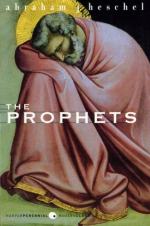
This Study Guide consists of approximately 33 pages of chapter summaries, quotes, character analysis, themes, and more - everything you need to sharpen your knowledge of The Prophets.

The Prophets Quiz

Students: Take our free The Prophets quiz below, with 25 multiple choice questions that help you test your knowledge. Determine which chapters, themes and styles you already know and what you need to study for your upcoming essay, midterm, or final exam. Take the free quiz now!

Teachers: The BookRags Lesson Plan contains hundreds of test and quiz questions, including multiple choice, short answer, and essay questions. Create your own quiz or test with our automatic test generator, or choose from our ready-to-go chapter quizzes, midterm tests, and final exams. Don’t waste time reinventing the wheel, get the Lesson Plan today!

Directions: Click on the correct answer.

1)

Heschel states that it is a mistake to think that what happens on earth reflects what? (from Part 1: Chapters 9-11; Part 2: Chapter 1)

What has happened in the past in heaven.
What has happened in the past on earth.
What is going to happen in the future on earth.
What is happening in heaven.
2)

Many of the figures in the Old Testament that the prophets spoke out against were close to whom? (from Part 2: Chapter 14-17)

The leader.
The king.
The priest.
The religious leader.
3)

Heschel quotes Samuel to show that what was better than sacrifice? (from Part 1: Chapters 9-11; Part 2: Chapter 1)

To obey.
To honor your father and mother.
To go to the temple.
To pray.
4)

What does Heschel see as the point when freedom is lost? (from Part 1: Chapters 9-11; Part 2: Chapter 1)

When a person misuses it.
When God takes it away.
When a person dies.
When God hardens a person's heart.
5)

Whom did the prophets blame for the injustices in the land? (from Part 1: Chapters 9-11; Part 2: Chapter 1)

Culture.
History.
Kings and leaders.
Religion.
6)

Heschel points out that God's wrath is what? (from Part 2: Chapters 2-5)

Terrible.
Righteous and just.
Like people's wrath.
Vengeful.
7)

Heschel writes that throughout history many cultures revere their king as what? (from Part 2: Chapter 14-17)

Father.
Warrior.
Leader.
God.
8)

According to Heschel, prophetic activity is determined by what? (from Part 2: Chapter 14-17)

The prophet.
Events.
God.
Culture.
9)

Heschel says the problem is not that we depict God incorrectly but what? (from Part 2: Chapters 2-5)

That we can't depict Him.
That we don't know how to depict Him.
He does not see depicting God as a problem.
That we try to depict Him at all.
10)

Who was Mesha? (from Part 1: Chapters 9-11; Part 2: Chapter 1)

A herdsman.
A prophet.
King of the Moabites.
King of the Israelites.
11)

If ecstasy were a requirement for a prophet, which prophets of the Old Testament would not have been classified as prophets? (from Part 2: Chapters 10-13)

Second Isaiah and Habakkuk.
Daniel and Zechariah.
Micah and Jonah.
Moses and Isaiah.
12)

In what religion do you do away with all feeling and obtain a type of peace? (from Part 2: Chapters 2-5)

Taoism.
Hindu.
Islam.
Karma.
13)

Pathos is not self-centered but is what kind of thinking? (from Part 1: Chapters 9-11; Part 2: Chapter 1)

Inward looking.
Prophetic.
Philosophical.
Judgmental.
14)

What attitude does Heschel take to other points of view that he uses in his book? (from Part 2: Chapters 10-13)

Respectful.
Disparaging.
Supportive.
Derogatory.
15)

What does Heschel say will change God's judgment about destruction? (from Part 1: Chapters 9-11; Part 2: Chapter 1)

A new prophet's heartfelt request.
A change in history.
Nothing.
A change in man's heart and actions.
16)

From the total perspective, what does Heschel say are demands rather than fulfillments? (from Part 2: Chapters 6-9)

Pathos and sympathy.
Prayer and solitude.
Love and forgiveness.
Action and speech.
17)

Heschel says that Moses would have taught what kinds of rules of right living to the people? (from Part 2: Chapters 10-13)

Simple rules.
Bizarre rules.
Complex rules.
Unusual rules.
18)

What are two unique features of a prophet? (from Part 2: Chapters 6-9)

Silent subordination and self-love.
Forgiveness and suppression of emotion.
Active cooperation and self-dedication to God.
Prayer and mercy.
19)

What is theotropism? (from Part 2: Chapter 14-17)

The natural order.
God turning towards humanity.
Construing the world in human terms.
Humans believing in gods.
20)

A central feature of the prophetic consciousness is what? (from Part 2: Chapter 14-17)

Human love reaching out to God.
Divine concern focused on man.
Human knowledge about God.
Divine intervention.
21)

Heschel alludes to the fact that to describe God in any terms implies that God is what? (from Part 2: Chapters 2-5)

Not all knowing.
Not all powerful.
Sinful.
Imperfect.
22)

Heschel states that it is important to distinguish between the objective and subjective aspects of what? (from Part 2: Chapters 6-9)

The prophetic consciousness of God.
Biblical prophecy.
Religious sympathy.
Ecstasy.
23)

What does the Stoic sage aim for? (from Part 2: Chapters 2-5)

Love.
Sympathy.
Apathy.
Pathos.
24)

What appears to us as wild emotionalism in the prophets, Heschel says may seem like what to the prophets themselves? (from Part 2: Chapters 6-9)

Sentimentality.
Passion.
Restraint.
Proper behavior.
25)

What happened to prophets when God called them to do his work? (from Part 1: Chapters 9-11; Part 2: Chapter 1)

They were shunned.
They were glorified.
They were honored.
They were shown respect.
Copyrights
The Prophets from BookRags and Gale's For Students Series. ©2005-2006 Thomson Gale, a part of the Thomson Corporation. All rights reserved.
Follow Us on Facebook
