
Forgot your password?  

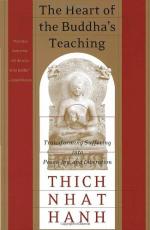
The Heart of the Buddha's Teaching Quiz

This Study Guide consists of approximately 45 pages of chapter summaries, quotes, character analysis, themes, and more - everything you need to sharpen your knowledge of The Heart of the Buddha's Teaching.

The Heart of the Buddha's Teaching Quiz

Students: Take our free The Heart of the Buddha's Teaching quiz below, with 25 multiple choice questions that help you test your knowledge. Determine which chapters, themes and styles you already know and what you need to study for your upcoming essay, midterm, or final exam. Take the free quiz now!

Teachers: The BookRags Lesson Plan contains hundreds of test and quiz questions, including multiple choice, short answer, and essay questions. Create your own quiz or test with our automatic test generator, or choose from our ready-to-go chapter quizzes, midterm tests, and final exams. Don’t waste time reinventing the wheel, get the Lesson Plan today!

Directions: Click on the correct answer.

1)

Mindful breathing helps us find what? (from Chapter Ten)

Peace and solidity.
Control.
Understanding.
Strength.
2)

How can we apply the teachings? (from Chapter Twenty-Eight)

Through our thoughts.
Through our meditation.
Through our words.
Through our actions.
3)

"_______________ is at the heart of Buddha's teachings." (from Chapter Eleven)

Right Mindfulness.
Right Action.
Right Diligence.
Right Concentration.
4)

Right thinking leads to what? (from Chapter Ten)

Right Activities.
Right Diligence.
Right Intelligence.
Right Praying.
5)

What do the Four Establishments of Mindfulness do? (from Chapter Eleven)

Identify our feelings.
Transform our suffering as well as the suffering of the world.
Create a place of refuge for ourselves and others.
Help us to forget suffering.
6)

Generosity, sharing, cultivating love and kindness, and living simply, taking no more than our share, is what? (from Chapters Thirteen and Fourteen)

Right Thinking.
Right Diligence.
Right Concentration.
Right Action.
7)

When people do not seem to love and understand us, what must we do? (from Chapter Twenty-Eight)

Forget them.
Be patient.
Be more loving and understanding.
Ignore them.
8)

Primarily of what do these anecdotes consist? (from Part Four - Discourses)

Buddha teaching various monks.
Buddha teaching a student some aspect of the practice of Buddhism.
Buddha teaching the author.
Buddha teaching prayers to others.
9)

"To practice social justice and non-exploitation, we have to use __________________." (from Chapter Twelve)

Right Speech.
Right Effort.
Right Diligence.
Right Concentration.
10)

We are always giving our attention to something, and it often does what? (from Chapter Eleven)

Takes us from the moment.
Helps us forget the moment.
Keeps us in the moment.
Encourages us to be in the moment.
11)

While Dharma is compassion, understanding and love, to realize it we need a _____________, or community and elements which support our practice. (from Chapters Twenty-One and Twenty-Two)

Syria.
Sangha.
Sanskrit.
Sangia.
12)

What is the fourth practice of Right Diligence? (from Chapters Thirteen and Fourteen)

Earning a living in non-destructive ways.
Sexual responsibility.
Ingesting healthy foods.
Watering and keeping wholesome mental formations.
13)

What is the Seventh Miracle of Mindfulness? (from Chapter Eleven)

Forgiving.
Understanding.
Transformation of our suffering as well as the suffering of the world.
Believing.
14)

What is the third of the five mindfulness trainings? (from Chapter Twenty-Five)

Giving and offering joy and love to others.
Perfection of the five mindfulness trainings.
To protect children and adults from sexual abuse and preserve happiness.
Protection of the lives of humans, animals and nature.
15)

Buddha suggests we replace unwholesome thoughts how? (from Chapter Ten)

By thinking of only wholesome thoughts.
By living in a wholesome environment with those who practice mindful living.
By asking Buddha to remove the unwholesome thoughts.
By relaxing.
16)

Looking beyond signs means what? (from Chaptesr Nineteen and Twenty)

Making one's own decisions.
Looking to Buddha for advice.
Not looking toward fate.
Losing fear of losing specific manifestations.
17)

What is the second of the five mindfulness trainings? (from Chapter Twenty-Five)

To protect children and adults from sexual abuse and preserve happiness.
Perfection of the five mindfulness trainings.
Protection of the lives of humans, animals and nature.
Prevent exploitation by humans of nature and others, and generosity.
18)

When we recognize suffering and look deeply into it, we are practicing what? (from Chapters Sixteen and Seventeen)

Right Diligence, Right Action, Right Thoughtfulness, and Right View.
Right Thinking, Right Thoughtfulness, Right Compassion, and Right Concentration.
Right Concentration, Right Contraction, Right Mindfulness, and Right Compassion.
Right View, Right Thinking, Right Mindfulness and Right Concentration.
19)

The Sarvastivada school's first condition requires what? (from Chapter Twenty-Seven)

Development.
Someone or some thing.
Consistent and continuous practice.
Creative force, concurrent condition, seed condition of the same kind, associated condition, universal condition and ripening condition.
20)

Thich Naht Hahn offers anecdotes about the Buddha that do what? (from Part Four - Discourses)

Illustrate more stories about the Buddha.
Illustrate the material contained in this book.
Illustrate contemporary Buddhist stories.
Illustrate various beliefs about Buddha.
21)

Hanh advises us to leave a job where we are not allowed to do what? (from Chapter Twelve)

Be promoted.
Speak truthfully.
Take breaks.
Get paid what we're worth.
22)

Nirvana is what? (from Chapter Eighteen)

The first step to paradise.
Unusual.
Heaven.
The ground of interbeing.
23)

Right Diligence or Effort involves what? (from Chapters Thirteen and Fourteen)

Preventing unwholesome seeds and returning them, finding ways to water and nourish the wholesome seeds that have already risen.
Acting appropriately.
Focusing on Right Thinking.
Watching the behavior of others.
24)

Why is life span an illusion? (from Chaptesr Nineteen and Twenty)

No one knows his or her life span.
A human life span is longer.
No one's life span is the same.
We have never been born and we never die.
25)

Another reminder, "Hello, habit energy," reminds us to do what? (from Chapter Ten)

Find moments to contemplate and be mindful, and acknowledge our habitual thinking and acting.
Improve our habits.
Forget our habits.
Change our habits.
Copyrights
The Heart of the Buddha's Teaching from BookRags and Gale's For Students Series. ©2005-2006 Thomson Gale, a part of the Thomson Corporation. All rights reserved.
Follow Us on Facebook
