
 Print
Print Word
Word PDF
PDF|
This section contains 382 words (approx. 1 page at 400 words per page) |

|
The Deadly Theatre, part 1 (pp. 11-30) Summary and Analysis
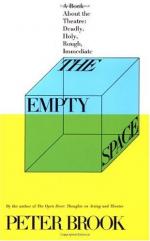
The author suggest that successful theatre is not of vibrant sensation and/or over-stimulation of the senses and emotions, but theatre in which members of an audience become emotionally and spiritually involved with "the man [walking] across the empty space." Theatre that doesn't function to connect with its audience is "deadly" theatre—theatre of dullness; in short, "deadly" theatre is theatre that, in his definition, is simply "bad".
Two qualities create deadly theatre: lack of human honesty in the production and lack of openness to that honesty in an audience. Both are the result of people doing things for the wrong reason, such as productions created solely to make money, managers who are too budget conscious, and/or audiences who come to the theatre for reasons other than wanting to...
(read more from the The Deadly Theatre, part 1 (pp. 11-30) Summary)
|
This section contains 382 words (approx. 1 page at 400 words per page) |
|





