
Forgot your password?  
Related Topics

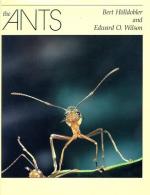
The Ants | Quiz

This Study Guide consists of approximately 39 pages of chapter summaries, quotes, character analysis, themes, and more - everything you need to sharpen your knowledge of The Ants.

The Ants | Quiz

Students: Take our free The Ants quiz below, with 25 multiple choice questions that help you test your knowledge. Determine which chapters, themes and styles you already know and what you need to study for your upcoming essay, midterm, or final exam. Take the free quiz now!

Teachers: The BookRags Lesson Plan contains hundreds of test and quiz questions, including multiple choice, short answer, and essay questions. Create your own quiz or test with our automatic test generator, or choose from our ready-to-go chapter quizzes, midterm tests, and final exams. Don’t waste time reinventing the wheel, get the Lesson Plan today!

Directions: Click on the correct answer.

1)

How many queens are present in a Monogyny ant colony? (from Chapter 6 Queen Numbers and Domination)

Over one hundred queens.
Over ten queens.
Two queens.
One queen.
2)

Which of the following scientists used to preserve ants in vodka? (from Chapter 20 Collecting, Culturing, Observing)

Berlese.
Shapley.
Fluon.
Tullgren.
3)

How many categories of ant communication are there? (from Chapter 7 Communication)

12.
15.
18.
21.
4)

What percentage of ant colonies are lost due to ground-feeding birds? (from Chapter 6 Queen Numbers and Domination)

40 percent.
60 percent.
20 percent.
80 percent.
5)

Which of the following types of ants maintain many different nests although they only live in one at a time? (from Chapter 7 Communication)

Army ants.
Leaf cutter ants.
Weaver ants.
Fire ants
6)

What type of hierarchy does Wilson use to describe an ant colony? (from Chapter 9 Social Homeostasis and Flexibility)

Subliminal hierarchy.
Dense hierarchy.
Functional hierarchy.
Veiled hierarchy.
7)

How long should vials used for preservation be? (from Chapter 20 Collecting, Culturing, Observing)

65 mm.
85 mm.
75 mm.
55 mm.
8)

Which of the following terms is defined as "an individual who has shed her wings"? (from Bibliography)

Declivity.
Distad.
Dealate.
Dorsum.
9)

Which of the following groups of ants does the least amount of physical work within the colony? (from Chapter 8 Caste and Division of Labor)

Sterile female ants.
Fertile female ants.
Queen ants.
Male ants.
10)

Which of the following is NOT a category of ant communication? (from Chapter 7 Communication)

Grooming.
Recognition.
Attack.
Recruitment.
11)

Which of the following areas was NOT focused on in the chapter regarding plant-ant symbiosis? (from Chapter 14 Symbioses Between Ants and Plants)

Africa.
Oceana.
Tropical Asia.
Galapagos.
12)

Which of the following insects is most detrimental to ant populations? (from Chapter 9 Social Homeostasis and Flexibility)

Spiders.
Ladybugs.
Locusts.
Aphids.
13)

Which of the following is NOT a method of communication used by ant species? (from Chapter 7 Communication)

Visual.
Expressionary.
Tactile.
Auditory.
14)

Which of the following is NOT a host used by fungus-growing ants in their gardens? (from Chapter 17 The Fungus Growers)

Manure.
Fruit.
Flowers.
Seeds.
15)

What happens to the offspring of a queen when she is forced into a polygyny society? (from Chapter 6 Queen Numbers and Domination)

The number of her offspring is unaffected.
The number of her offspring increases.
She will no longer produce offspring.
The number of her offspring decreases.
16)

What does a "true ectoparasite" feed off? (from Chapter 13 Symbioses With Other Arthropods)

Blood.
Larvae.
Soil.
Excrement.
17)

During his studies in Louisiana, what system did Moser find ant fungus growing ant nests? (from Chapter 17 The Fungus Growers)

Ventilation systems.
Transportation systems.
Plumbing systems.
Hydration systems.
18)

How many species of ants were represented in the ant mosaic of Queensland, Australia? (from Chapter 11 The Organization of Species Communities)

34.
24.
4.
14.
19)

What is the main component of a weaver ant's nest? (from Chapter 19 Weaver Ants)

Garbage.
Leaves.
Sand.
Wood.
20)

Which of the following terms is defined as "tapering to a fine point"? (from Bibliography)

Aggregation.
Acuminate.
Alleothism.
Appressed.
21)

What are repletes concerned with? (from Chapter 8 Caste and Division of Labor)

Brood care.
Reproduction.
Defense.
Food storage.
22)

What type of weather facilitates the introduction of parasitic queens? (from Chapter 12 Symbioses Among Ant Species)

Cool weather.
Stormy weather.
Sunny weather.
Humid weather.
23)

Which of the following was NOT an achievement obtained in the goal toward understanding reductionism? (from Chapter 9 Social Homeostasis and Flexibility)

The simulation of nest building.
The rearing of isolated ant larvae.
The perception of heterarchical organization.
The activation of social behavioral response.
24)

Which of the following insects are harvested in "ranches" by ants? (from Chapter 13 Symbioses With Other Arthropods)

Fleas.
Katydids.
Aphids.
Honeybees.
25)

What happens when a queen ant is found to be infertile? (from Chapter 6 Queen Numbers and Domination)

She becomes a worker ant.
She is ignored.
She is expelled from the colony.
She is killed.
Copyrights
The Ants from BookRags and Gale's For Students Series. ©2005-2006 Thomson Gale, a part of the Thomson Corporation. All rights reserved.
Follow Us on Facebook
Homework Help
