
Forgot your password?  
Related Topics

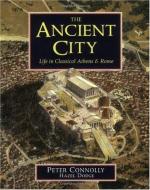
The Ancient City: Life in Classical Athens & Rome Quiz

This Study Guide consists of approximately 37 pages of chapter summaries, quotes, character analysis, themes, and more - everything you need to sharpen your knowledge of The Ancient City.

The Ancient City: Life in Classical Athens & Rome Quiz

Students: Take our free The Ancient City: Life in Classical Athens & Rome quiz below, with 25 multiple choice questions that help you test your knowledge. Determine which chapters, themes and styles you already know and what you need to study for your upcoming essay, midterm, or final exam. Take the free quiz now!

Teachers: The BookRags Lesson Plan contains hundreds of test and quiz questions, including multiple choice, short answer, and essay questions. Create your own quiz or test with our automatic test generator, or choose from our ready-to-go chapter quizzes, midterm tests, and final exams. Don’t waste time reinventing the wheel, get the Lesson Plan today!

Directions: Click on the correct answer.

1)

_______ is the god of wine and emotion. (from Part I: Athens, Pages 48 through 102)

Athena.
Dionysus.
Maenads.
Hermes.
2)

The entrance to the basilica from the forum of the Trajan's Forum is depicted on this. (from Part II: Rome, Pages 190 through 251)

Vases.
Coins.
Paintings.
Floors.
3)

Three of the most significant works of ancient Rome are: (from Part II: Rome, Pages 105 through 149)

Paved roads, sewer systems, and theater.
Aqueducts, paved roads and sewer systems.
Aqueducts, paved roads and farms.
Paved roads, aqueducts, and cities.
4)

The only trilogy to survive from ancient Athens is this. (from Part I: Athens, Pages 48 through 102)

Clytemnestra.
Argos.
Oresteia.
Agamemnon.
5)

This altar is built on the Campus Martius to commemorate the victories of the emperor in Spain. (from Part II: Rome, Pages 105 through 149)

Forum Augustum.
Livia.
Forum Romanum.
Ara Pacis.
6)

There are 144 of these in Rome, according to historical record. (from Part II: Rome, Pages 105 through 149)

Houses.
Horse stables.
Farms.
Public toilets.
7)

The Temple of Venus and Rome is likely designed by this person. (from Part II: Rome, Pages 190 through 251)

Trajan.
Augustus.
Aldonian.
Hadrian.
8)

The aqueduct that supplies the Baths of Trajan is ________. (from Part II: Rome, Pages 190 through 251)

Aqua Verci.
Aqua Decin.
Aqua Sentic.
Aqua Traiana.
9)

These, built in 312 BC, provide a reliable source of water for Romans. (from Part II: Rome, Pages 105 through 149)

Sewage plants.
Water towers.
Wells.
Aqueducts.
10)

This invention helps make way for the building of the Colosseum, the Baths of Trajan and the Temple of Venus. (from Part II: Rome, Pages 105 through 149)

Brick.
Concrete.
Mortar.
Cranes.
11)

One of the most obvious characteristics of Roman entertainment is this. (from Part II: Rome, Pages 150 through 189)

Humor.
Severity.
Variety.
Length.
12)

These types of buildings are found only in Rome during this period. (from Part II: Rome, Pages 105 through 149)

Hostels.
Flats.
Apartments.
Atrium style homes.
13)

This ruler is given the title of imperator and Augustus in 27 BC, which changes Rome from a Republic to a Principate. (from Part II: Rome, Pages 105 through 149)

Cinna.
Mark Anthony.
Caesar.
Octavian.
14)

This sport is popular among the upper class, and displays of this are popular. (from Part II: Rome, Pages 190 through 251)

Hunting.
Running.
Discus.
Fishing.
15)

Sophocles and Euripides are considered the best of these. (from Part I: Athens, Pages 48 through 102)

Greek comedians.
Greek musicians.
Greek playwrights.
Greek performers.
16)

The Hellenised Egyptian goddess ____ also has a cult in Rome. (from Part II: Rome, Pages 150 through 189)

Gelda.
Era.
Mithras.
Isis.
17)

The principle training school for gladiators is this. (from Part II: Rome, Pages 190 through 251)

Ladia Velta.
Favre Theater.
Ludus Magnus.
Colosseum.
18)

Roman literature indicates this is widespread. (from Part II: Rome, Pages 150 through 189)

Poverty.
Famine.
Adultery.
Disease.
19)

This is otherwise known as the banquet hall. (from Part II: Rome, Pages 190 through 251)

Triclinium.
Peristyle.
Hippodromos.
Domus Augustana.
20)

The earliest example of the thermae plan is this. (from Part II: Rome, Pages 190 through 251)

The Baths of Trajan.
The Baths of Augustus.
The Baths of Rome.
The Baths of Athens.
21)

Under this ruler, a land-locked inner basin is built which is linked to the Tiber via a canal. (from Part II: Rome, Pages 105 through 149)

Claudius.
Trajan.
Augustus.
Othello.
22)

Roman foods are often highly _____. (from Part II: Rome, Pages 150 through 189)

Priced.
Praised.
Spiced.
Valued.
23)

Travelers do not travel at night because of these. (from Part II: Rome, Pages 105 through 149)

Rats.
Wild animals.
Muggers.
Curfews.
24)

An altar depicting ____ stands at one end of the mithraeum. (from Part II: Rome, Pages 150 through 189)

Isis.
Judas.
Mithras.
Eros.
25)

This covered building is erected for the Panathenaic Games when Pericles decides to include musical events. (from Part I: Athens, Pages 48 through 102)

Temple of Dionysus.
Dorpfeld Theater.
Odeon.
Fourth century stoa.
Copyrights
The Ancient City: Life in Classical Athens & Rome from BookRags and Gale's For Students Series. ©2005-2006 Thomson Gale, a part of the Thomson Corporation. All rights reserved.
Follow Us on Facebook
