
 Print
Print Word
Word PDF
PDF|
This section contains 249 words (approx. 1 page at 400 words per page) |

|
A Room of One's Own Summary & Study Guide Description
A Room of One's Own Summary & Study Guide includes comprehensive information and analysis to help you understand the book. This study guide contains the following sections:
This detailed literature summary also contains Bibliography and a Free Quiz on A Room of One's Own by Virginia Woolf.
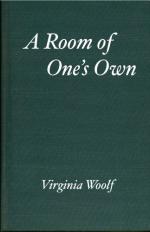
A Room of One's Own is a classic text of the feminist movement. It is an expanded treatment of issues that Woolf presented in two essays she read to audiences at women's colleges in 1928. While the book is focused on women and fiction, its ideas and discussions overlap with larger questions pertinent to women's history.
At the center of the book is its famous thesis, which is echoed in the book's title. In asserting that a woman needs a room of her own to write, Woolf addresses both a historical and a contemporary question regarding women's art and their social status. The historical question is why there have been few great women writers. The contemporary question is how the number of women writers can increase. Woolf s answerthis matter of a room of one's ownis known as a "materialist" answer. That is, Woolf says that there have been few great women in history because material circumstances limited women's lives and achievements. Because women were not educated and were not allowed to control wealth, they necessarily led lives that were less publicly significant than those of men. Until the these material limitations are overcome, women will continue to achieve, publicly, less than men. Woolf s materialist thesis implicitly contests notions that women's inferior social status is a natural outcome of biological inferiority. While most people now accept the materialist position, in Woolf s time, such arguments still had to be put forward with conviction and force.
Read more from the Study Guide
|
This section contains 249 words (approx. 1 page at 400 words per page) |
|




